3D printing for small business — ideas and opportunities
Why small businesses choose 3D printing
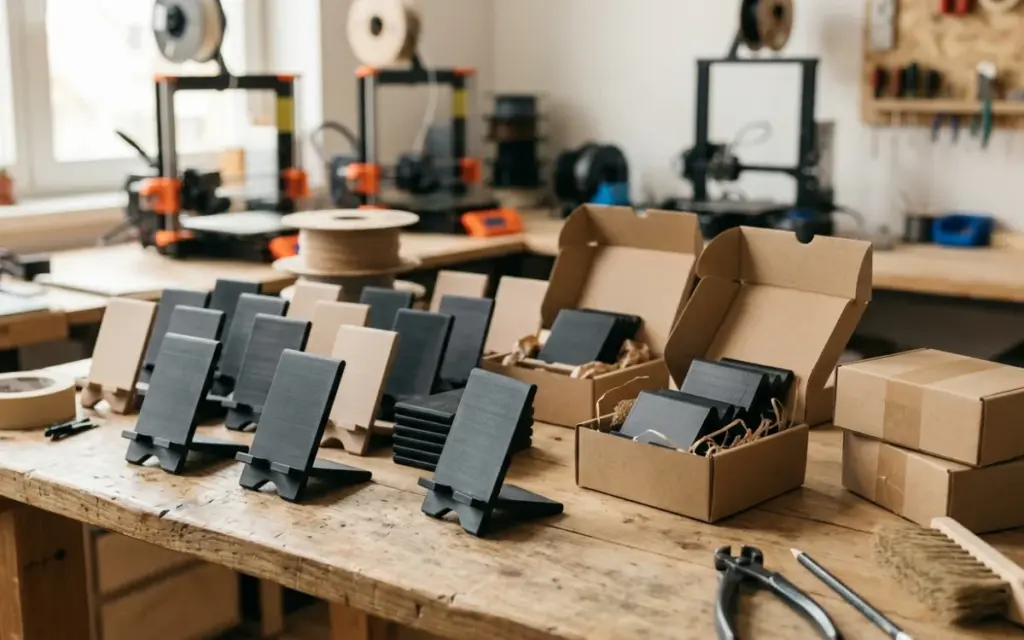
Not long ago, 3D printing was associated only with large industrial companies and tech giants. Today the picture has changed completely: additive technologies have become affordable for small businesses, opening up many opportunities — from creating unique products to optimising production processes. In this article we look at specific business ideas involving 3D printing and estimate their potential profitability.
Business ideas using 3D printing
Personalised gifts and souvenirs
The market for personalised gifts is growing fast. People want to give something unique, not a mass-produced item off a shop shelf. 3D printing lets you create:
- Name keyrings, stands and organisers
- Miniature copies of people (from a 3D scan)
- Custom phone cases
- Themed cake toppers
- Personalised vases, lamps and decor
Margins on such products can reach 200–400%, since the material for a keyring costs 10–20 UAH and it sells for 100–300 UAH. For printing small items and figurines you can use the miniature printing service at 3dprint.lviv.ua.
Custom merchandise
Companies, bloggers, bands and sports clubs need unique merch. 3D printing lets you make:
- Branded accessories — badges, clips, holders with a logo
- Desk items — pen stands, card holders and organisers with your branding
- Collectible figures — brand mascots and characters
The advantage of 3D printing is the ability to make small batches from 10 units, which is impossible with traditional moulding.
Spare parts on demand
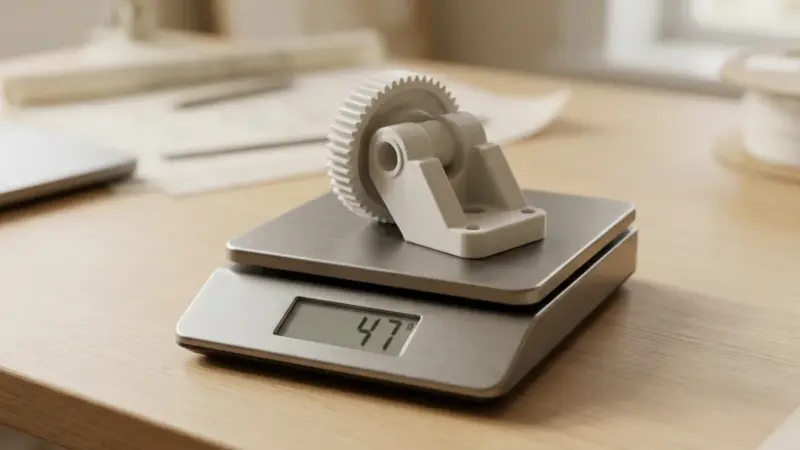
One of the most promising niches is spare parts production. A plastic part of a discontinued appliance broke? Need a non-standard gear or mount? 3D printing solves the problem.
The business model is simple:
- The customer brings the broken part or provides the dimensions
- You create a 3D model (or find a ready-made one)
- You print it and hand it over
Demand for such services is consistently high, since the alternative — buying a new appliance — costs much more.
Architectural models
Architecture firms and developers need physical building models for client presentations and tenders. 3D printing makes it possible to create detailed architectural models much faster and cheaper than traditional hand-built models.
One architectural model can cost from 3,000 to 30,000 UAH depending on complexity — a high-margin niche with steady demand. For precise models, use the prototype printing service.
Packaging prototypes
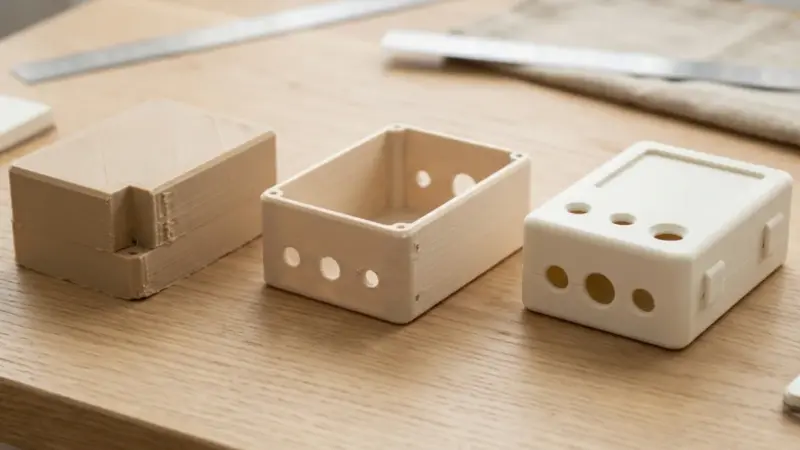
Before launching a new product, companies need packaging prototypes. 3D printing lets you check the ergonomics, design and functionality of packaging before ordering a large production run. This is especially relevant for cosmetics brands, food producers and pharmaceutical companies.
Trade show stands and display materials
At trade shows you need to stand out from the competition. 3D-printed stand elements — 3D logos, product demo models, interactive elements — attract attention and stick in visitors’ memories far better than ordinary banners.
Production fixtures: jigs and holders
For small manufacturers, 3D printing has been a real lifesaver for making jigs and fixtures — special devices that hold parts during machining, assembly or quality control. Such tools used to be custom-made from metal at a high price. Now they can be printed in PETG or nylon in a few hours.
Examples of use:
- Holders for soldering circuit boards
- Templates for drilling holes accurately
- Holders for painting parts
- Sorting trays for small components
Small-batch production
For runs of 10 to 200 units, 3D printing is often the most economical production method. No moulds, no minimum order, and you can quickly change the design between batches. It’s ideal for niche products with small but steady demand.
Calculating profitability: does 3D printing pay off for a business?
Let’s look at a typical example — making personalised desk accessories:
- Material cost — 30–80 UAH per item (depending on size)
- Print time — 2–5 hours
- Electricity — 5–15 UAH per print
- Post-processing — 15–30 minutes
- Total cost — 50–130 UAH
- Selling price — 250–600 UAH
- Margin — 200–400%
One printer can produce 3–5 items a day, giving a monthly income of 15,000 to 50,000 UAH. Scale up to several printers and the income grows accordingly.
Your own printer or outsourcing?
One of the key decisions for a small business is whether to buy its own 3D printer or order printing from a service. Let’s compare the two options:
Your own printer
Pros:
- Full control over the process and timing
- Lower printing costs in the long run
- The ability to print 24/7
- Confidentiality of your designs
Cons:
- An initial investment of 15,000 to 100,000 UAH
- Time needed for learning and setup
- Maintenance and repairs are your responsibility
- A limited choice of materials and technologies
Outsourcing printing
Pros:
- Zero upfront investment
- Access to different materials and technologies
- Professional print quality
- No equipment to maintain
Cons:
- A higher cost per unit
- Dependence on the service provider
- A longer cycle (delivery)
The best strategy for most small businesses is to start with outsourcing. This lets you test the business idea without a big investment. Once volumes grow and the model is proven, invest in your own equipment. You can see what outsourced printing costs on the prices page.
How to start a 3D printing business
A step-by-step plan for launching a business built around 3D printing:
- Step 1: Choose a niche — don’t try to cover everything at once. Focus on one area: gifts, spare parts, architectural models and so on
- Step 2: Research the market — study competitors, set your price range, understand customers’ needs
- Step 3: Make your first samples — print 5–10 product samples for your portfolio
- Step 4: Test sales — sell through marketplaces (Etsy, Prom.ua) or social media
- Step 5: Scale up — once demand is steady, invest in your own equipment and expand the range
Choosing materials for business applications
Every niche needs its own material. See the full list of available materials on the materials page.
- PLA — gifts, decor, souvenirs, visual models
- PETG — functional parts, spare parts, containers
- ABS — industrial fixtures, enclosures, car parts
- TPU — flexible parts, cases, gaskets, protective elements
- Nylon — gears, bushings, parts with high wear-resistance requirements
Real examples of successful businesses
Here are a few examples of small businesses that use 3D printing successfully:
- A spare parts workshop — prints plastic parts for household appliances and cars. Average order 300–800 UAH, 10–15 orders a day
- A personalised gift studio — creates unique made-to-order items for holidays and corporate events. Peak season is December and February
- An architectural model service — works with 5–7 architecture firms, making 3–4 models a month with an average order of 10,000–25,000 UAH
- A board game maker — prints components for independent board games in small runs
Common beginner mistakes
- Too wide a range — it’s better to make 5 things excellently than 50 things averagely
- Ignoring post-processing — an unfinished print rarely looks like a finished product
- Wrong pricing — don’t forget to include modelling time, electricity, equipment wear and your own time
- No marketing — even the best product won’t sell itself
Conclusion
3D printing opens up opportunities for small businesses that used to be available only to large manufacturers. A low barrier to entry, high margins and growing demand for personalised goods make this technology attractive to entrepreneurs. The key is to choose the right niche, ensure quality and build a steady sales channel.
Ready to start your own 3D printing business, or need a reliable partner for outsourced printing? Contact the 3dprint.lviv.ua team — we’ll help with printing of any complexity, choose the best material and deliver consistent quality for your business!
Order 3D printing
Need quality 3D printing? order 3D printing. prices. prototype printing. Delivery across Ukraine by Nova Poshta.
Need a prototype or a small batch? Send the model and the quantity — we’ll quote it within an hour and work out the per-piece price for a batch.