Prototyping for startups: how 3D printing shortens the road to a product
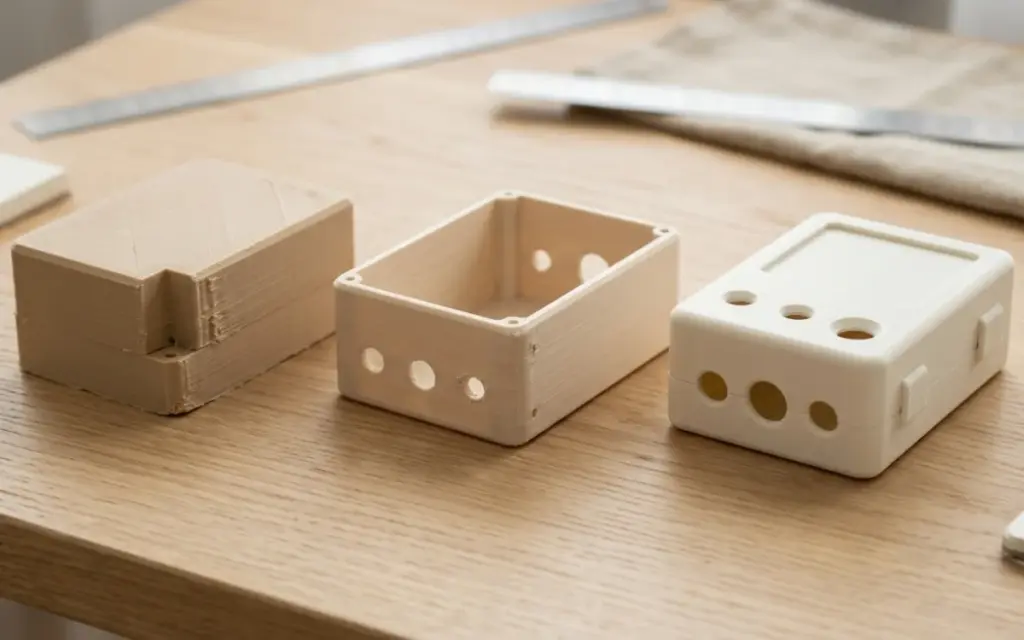
Why prototyping is the key to a startup’s success
Every successful product starts with an idea. But between the idea and a finished product lies a gap that prototyping helps you cross. In modern business, time to market decides everything: whoever presents a working prototype first gets the investment, the customers and the competitive edge. And 3D printing has become the tool that lets startups turn ideas into physical objects in a matter of days.
Advantages of 3D printing for startups
Fast idea validation
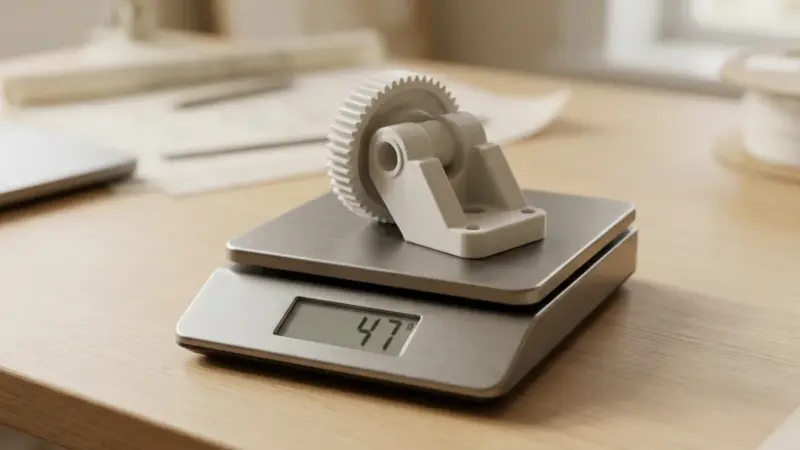
The biggest mistake startups make is spending months developing a product nobody needs. 3D printing lets you create a physical prototype in 1–3 days and get feedback from potential customers straight away. Holding the prototype, a user can judge the ergonomics, size, weight and overall impression — things you can’t understand from a render on a screen.
Significant cost savings
Making prototypes traditionally, by milling or injection moulding, requires expensive moulds. Compare:
- An injection mould — from 30,000 to 150,000 UAH, 4–8 weeks to make
- CNC milling — from 5,000 to 30,000 UAH per part, 1–2 weeks
- A 3D-printed prototype — from 200 to 3,000 UAH, 1–3 days
For a startup without stable funding yet, the difference is enormous. Instead of putting hundreds of thousands into a mould that may become useless after the first iteration, you spend a minimum — and can afford dozens of iterations.
Fast design iteration
The first version of a product is rarely perfect. It usually takes 5–15 iterations before a design is right. With 3D printing, each iteration takes 1–2 days and costs very little. This lets startups use the “fail fast” approach — test quickly, improve quickly, move forward quickly.
Convincing investor presentations
Investors want to see not just PowerPoint slides but a real product. A physical prototype at an investor meeting makes a far bigger impression than a 3D render. It shows the team is serious, technically ready and close to market. According to statistics, startups with physical prototypes raise investment 30–40% more often than those who come with just a presentation.
3D printing and crowdfunding
Crowdfunding platforms such as Kickstarter and Indiegogo have become a powerful channel for launching new products. And 3D printing plays a key role in preparing a successful campaign:
- Photos and video — a quality prototype makes professional photos and video for the campaign possible
- Demonstrating functionality — backers want to see that the product works and isn’t just a concept
- Testing market demand — before launching the campaign, you can give prototypes to a focus group and get feedback
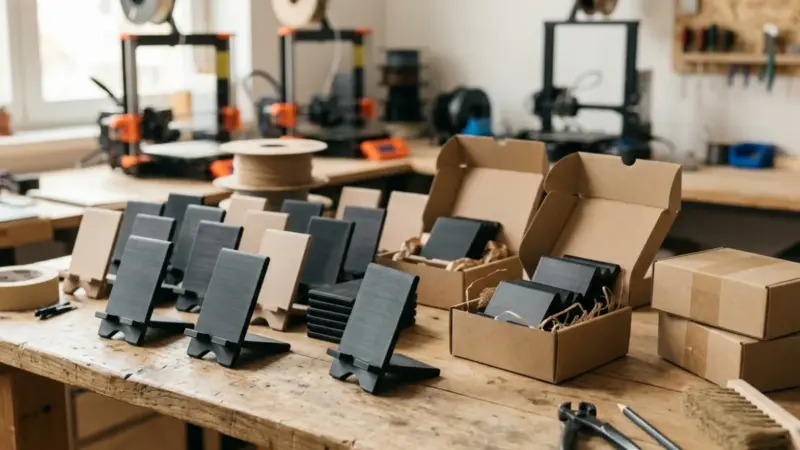
- First batches — for small runs (50–200 units), 3D printing can be the main production method
The MVP approach with 3D printing
The concept of a Minimum Viable Product (MVP) fits perfectly with 3D printing. Instead of developing a perfect product with every feature, create a minimal version that shows the core value.
An example of the MVP approach with 3D printing:
- Week 1 — create a 3D model of the basic version of the product
- Week 2 — print the prototype and do initial testing
- Week 3 — collect feedback from 10–20 potential users
- Week 4 — make changes and print an improved version
- Weeks 5–6 — test again and finalise the design
In 6 weeks you have a validated product, ready for the next step — mass production. Use the prototype printing service from 3dprint.lviv.ua to speed up this process.
Use cases of 3D printing in business
Electronics and IoT devices
Smart device startups use 3D printing to make enclosures. This lets them test the ergonomics, button layout, port placement and overall design before ordering an expensive mould for mass production.
Consumer goods
From innovative kitchen gadgets to sports equipment, 3D printing lets you check whether a product is convenient to use, whether the target audience likes it and whether it has competitive advantages.
Industrial equipment
B2B startups print prototypes of parts and assemblies to show potential customers. This is especially important at industrial trade shows, where having a physical sample is a must.
Medical devices
Prototypes of medical devices and instruments go through many iterations. 3D printing lets you quickly make changes based on testing by doctors and get feedback from end users.
Cost comparison: 3D printing vs traditional manufacturing
Let’s look at a typical scenario for a startup developing a plastic enclosure for an electronic device:
- Injection moulding: mould — 80,000 UAH, lead time — 6 weeks, unit cost — 15 UAH (for runs of 1,000+)
- 3D printing (FDM): no upfront costs, lead time — 1–2 days, unit cost — 300–800 UAH
For the first 10 prototypes, 3D printing will cost 3,000–8,000 UAH, while moulding costs 80,000+ UAH. Savings at the prototyping stage can reach 90%. You can find out more about printing prices on the prices page.
When to move to mass production
3D printing is ideal for prototypes and small batches, but mass production needs other technologies. Here are guidelines for when to switch:
- Up to 50 units — 3D printing is the best solution
- 50–500 units — 3D printing is still competitive, especially for complex parts
- 500–1,000 units — consider silicone moulds or vacuum casting
- 1,000+ units — injection moulding becomes cost-effective
Important: the design must be fully finalised before you order a mould. Any change after the mould is made will cost tens of thousands of hryvnias. That’s why the 3D-printed prototyping stage is so critical.
Choosing a material for prototypes
The right material depends on the purpose of the prototype. See the full list of available materials on the materials page.
- PLA — for visual prototypes and presentations. Good surface quality, easy to finish
- PETG — for functional prototypes that must take loads
- ABS — for prototypes as close as possible to production parts (most mass-produced plastic products are made of ABS)
- TPU — for prototypes of flexible parts: gaskets, cases, protective bumpers
- Nylon — for prototypes with higher requirements for strength and wear resistance
3D prototyping tips for startups
- Start with low detail — the first prototype should test the concept, not be perfect
- Test with real users — don’t rely only on your team’s opinion
- Document every iteration — note what you changed and why
- Design with mass production in mind — even at the prototype stage, think about manufacturability for moulding
- Use professional printing — a home printer’s quality may not be good enough for investor presentations
Conclusion
3D printing prototypes isn’t just a way to save money. It’s a strategic advantage that lets startups move faster, fail more cheaply and reach the market with a validated product. In a world where speed decides success, being able to get a physical prototype in a few days instead of a few months is what separates successful startups from those who were too late.
Developing a new product and need a quality prototype? Contact the 3dprint.lviv.ua team — we’ll quickly print a prototype of your product, choose the best material and deliver quality worthy of an investor presentation!
Order 3D printing
Need quality 3D printing? prototype printing. materials. prices. Delivery across Ukraine by Nova Poshta.
Need a prototype or a small batch? Send the model and the quantity — we’ll quote it within an hour and work out the per-piece price for a batch.