PETG for 3D printing: properties, applications and printing tips
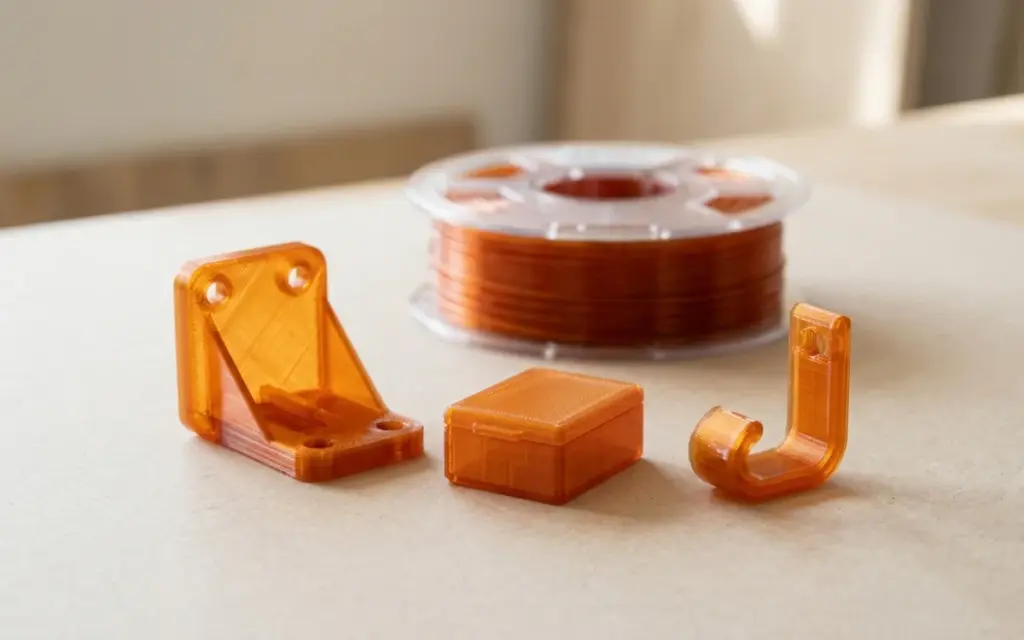
In short
- We recommend PETG in 8 out of 10 cases when a functional part is needed: it’s strong and unafraid of moisture, sun and household chemicals.
- It holds up to 80 °C; ABS withstands more (105 °C), but PETG prints almost like PLA.
- Settings: nozzle 230–250 °C, bed 70–80 °C, part cooling 30–50%, no enclosed chamber needed.
- The main problems are stringing and sticking to the bed too strongly; retraction and a glue stick fix them.
PETG: what this material is and why we recommend it
PETG (polyethylene terephthalate glycol-modified) is the plastic we recommend to customers in 8 out of 10 cases when a functional part is needed. The “G” stands for glycol — a modifier that makes ordinary PET (the same plastic water bottles are made of) suitable for FDM printing. Glycol lowers the crystallisation temperature, adds clarity and reduces warping during printing.
If you’re looking for a material that can take real loads and isn’t afraid of moisture or sun, PETG fits the bill. Let’s go through its properties with examples from our work.
Key properties of PETG
Impact resistance
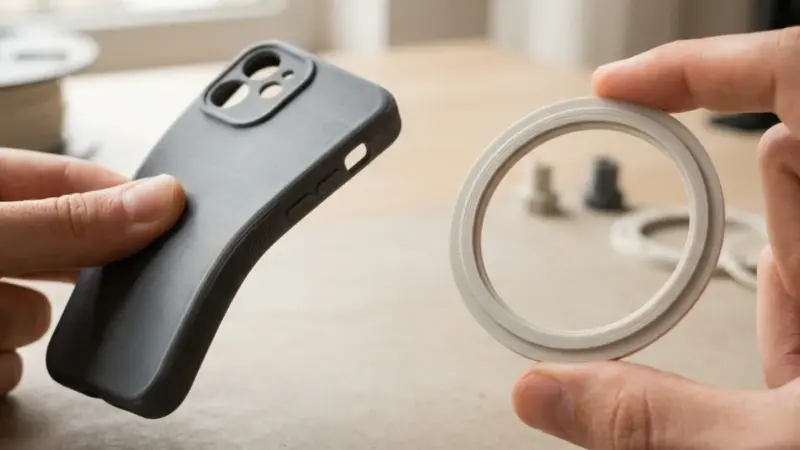
PETG is much stronger than PLA and less brittle than ABS. It withstands impacts, bending and stretching. We tested it in practice: we dropped a PETG electronics enclosure from 1.5 m onto concrete — not a single crack. PLA shatters straight away in the same test.
Chemical resistance
It resists household acids, alkalis and solvents. One of our customers prints holders for a chemistry lab in PETG — after a year of daily contact with reagents the parts haven’t degraded.
UV resistance
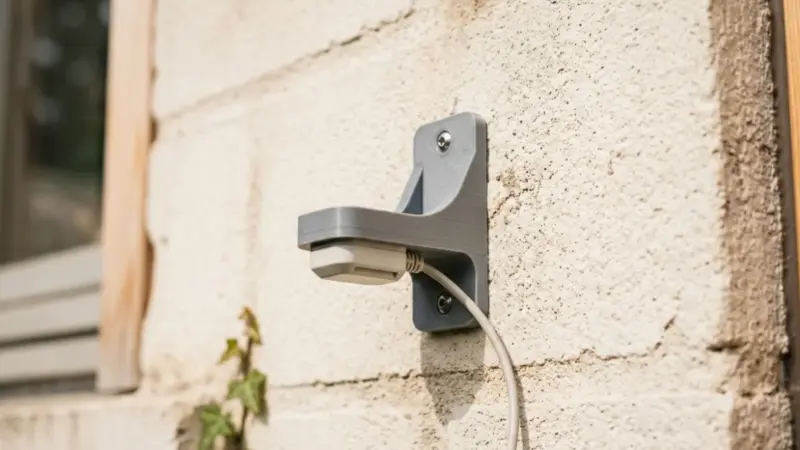
Unlike PLA, which becomes brittle and yellows in the sun within a few months, PETG handles UV well. Outdoor parts in PETG are normal practice. We printed a security camera mount that has been on a building facade for over a year with no signs of degradation.
Food safety
PETG is considered safe for food contact — it doesn’t give off harmful substances. But there’s a catch: micro-gaps between print layers can harbour bacteria. For complete safety, we recommend coating the surface with food-safe epoxy or using the item only for dry foods.
Clarity
Natural PETG is translucent. With the right settings (temperature +5°C, speed 30 mm/s, wide lines) you can get almost clear parts. We print LED diffusers in clear PETG — the results are very good.
PETG vs PLA and ABS
A short comparison of the three most popular materials:
- PLA — the easiest to print and cheap, but brittle and can’t take heat or sun. For prototypes and decor.
- ABS — heat-resistant (105°C) and strong, but needs an enclosed chamber, shrinks a lot and smells when printing.
- PETG — in between: as strong as ABS, prints almost like PLA, and resists moisture, chemicals and UV.
PETG only loses to ABS on heat resistance (80°C vs 105°C) and acetone smoothing. In everything else it either outperforms ABS or matches it.
PETG print settings
Printing PETG isn’t much harder than PLA, but there are a few nuances. Here are the settings we work with every day:
- Nozzle temperature: 230–250°C (depends on the filament manufacturer; we start at 240°C and adjust).
- Bed temperature: 70–80°C. Glass or a PEI surface works best.
- Enclosed chamber: not needed — PETG doesn’t crack with temperature changes.
- Print speed: 40–60 mm/s for a good surface.
- Part cooling: 30–50%. Full cooling worsens layer adhesion — we confirmed this with tensile tests.
- Retraction: 4–6 mm for Bowden, 1–3 mm for Direct Drive. More than for PLA, because PETG is stringier.
Important: PETG sticks to the bed very well, sometimes too well. We always use a glue stick as a release layer — otherwise you can damage the PEI surface when removing the part.
What we print in PETG most often
Outdoor parts
Security camera mounts, enclosures for outdoor sensors, parts of garden structures. Rain, snow, sun — PETG copes without a problem.
For the same reason, PETG is the main plastic for fishing gear: lures, tackle boxes and rod holders. See examples in the article 3D printing for anglers.
Mechanical components
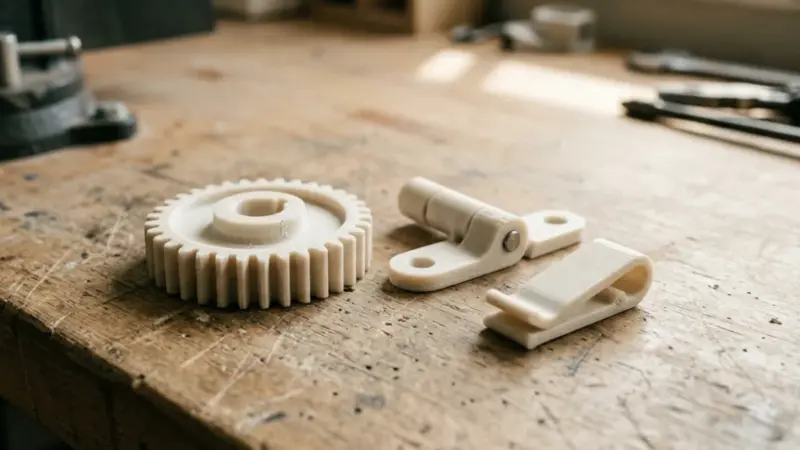
Gears, brackets, gearbox housings, guides. Anywhere strength and wear resistance are needed.
Kitchen accessories
Spice racks, utensil holders, moulds. Thanks to its food safety, PETG suits the kitchen.
Transparent parts
LED diffusers, protective screens, windows for enclosures. Clear PETG lets light through better than any other FDM material.
Car parts
Phone holders, dashcam mounts, blanking caps, car interior parts. PETG withstands vibration and the temperature swings in a car interior (up to +80°C, which covers summer heat).
Post-processing PETG
- Sanding — with 200 to 2000 grit sandpaper. You can get an almost glossy surface.
- Painting — holds paint well, especially after priming.
- Drilling and threading — machines with standard tools without chipping.
- Gluing — cyanoacrylate (superglue) or epoxy. We use superglue with an activator — it sets in 5 seconds.
PETG can’t be smoothed with acetone (unlike ABS). For a perfectly smooth surface, mechanical finishing is needed.
Common PETG problems and how we solve them
Stringing
The most common complaint about PETG is threads between features. The material is stringy and leaves strings as the nozzle travels. How we deal with it:
- Increase retraction by 1–2 mm over the baseline.
- Retraction speed — 40–50 mm/s.
- Lower the temperature by 5–10°C (but not below 225°C).
- Turn on “Wipe” in the slicer.
- Remove any remaining strings with a heat gun in 30 seconds.
Sticks to the bed too strongly
PETG can bond to glass or PEI so strongly that removing it damages the surface. Our solution:
- A thin layer of glue stick before printing — it creates a release barrier.
- Increase the nozzle-to-bed gap by 0.02–0.05 mm compared with PLA.
- Wait for the bed to cool completely before removing the part — don’t rush, it will come off on its own.
Cloudiness in clear parts
For maximum clarity: a wall thickness that’s a multiple of the nozzle diameter, a temperature 5–10°C above standard and a speed of 30 mm/s. Wide lines with good overlap reduce air bubbles and improve optical clarity.
Read also
Order PETG printing
PETG is our main material for functional parts. If you need an item that will work in real conditions (load, moisture, sun, chemicals), PETG almost always fits. Message us, describe the task, and we’ll choose the best print settings. We ship anywhere in Ukraine.
Order 3D printing
Need quality 3D printing? all materials. PETG printing prices. order printing. Delivery across Ukraine by Nova Poshta.
Need a part in PETG? Send the model and tell us the operating conditions — moisture, sun, load. We’ll quote it within an hour.
FAQ
How is PETG better than PLA?
It’s much stronger and bends rather than cracks on impact, doesn’t absorb water, and withstands UV and temperatures up to 80 °C. PLA softens at just 55–60 °C.
Is PETG safe for contact with food?
The material itself is considered food-safe, but bacteria can build up in the micro-gaps between layers. For kitchen use, coat the item with food-safe epoxy or use it for dry foods.
Is PETG suitable for outdoor use?
Yes, it withstands rain, snow and UV. Our PETG security camera mount has been on a building facade for over a year with no signs of degradation.
What temperature is PETG printed at?
Nozzle 230–250 °C (we start at 240 °C), bed 70–80 °C, part cooling 30–50%. No enclosed chamber needed.
How do I get rid of stringing when printing PETG?
Increase retraction by 1–2 mm, set retraction speed to 40–50 mm/s, lower the temperature by 5–10 °C (not below 225 °C) and turn on Wipe in the slicer.