ASA filament for 3D printing: better than ABS outdoors
In short
- ASA is “outdoor ABS”: the same strength, but it doesn’t yellow or crack in the sun for years.
- It withstands rain, snow and temperatures from −30 to +80 °C; working temperature up to 95–100 °C.
- Printing: nozzle 240–260 °C, bed 90–110 °C, an enclosed chamber and extraction are desirable.
- Downsides — the smell of styrene, a tendency to warp and a price 20–40% higher than ABS.
- For indoors, PLA, PETG or ABS are simpler; for outdoors, ASA.
What ASA plastic is and why it’s replacing ABS outdoors
ASA (acrylonitrile styrene acrylate) is an engineering thermoplastic created as an improved alternative to ABS plastic. The main difference is an acrylate component instead of butadiene, which makes the material resistant to ultraviolet radiation. If you’re printing parts that will stand outdoors, ASA is the first thing to consider.
In mechanical properties ASA is very close to ABS: strong, rigid and good at holding its shape. But where ABS yellows, cracks and loses strength after a few months in the sun, ASA keeps its properties for years. That’s why this material has been widely used in the automotive industry, construction and exterior finishing since the 1970s, long before 3D printing appeared.
ASA vs ABS: a detailed comparison
At first glance, ASA and ABS are almost identical materials. Both machine well and can be glued with acetone, sanded and painted. But there are fundamental differences that decide the choice between them.
UV resistance — ASA’s main advantage
An ABS part left in the sun noticeably changes colour and becomes brittle within 2–3 months. ASA withstands prolonged exposure to direct sunlight without degrading. This has been confirmed by numerous tests: even after a year outdoors, ASA parts retain up to 90% of their original strength.
Chemical and weather resistance
ASA resists moisture, rain, temperature changes and even contact with some chemicals better. This makes it a reliable choice for functional parts working in harsh conditions.
What they have in common
- Similar tensile strength and impact toughness
- Working temperature up to 95–100°C
- Can be joined with acetone (chemical welding)
- A smooth matte surface finish
- Similar printing conditions and tendency to warp
If your item will work exclusively indoors, ABS remains an excellent choice — it’s cheaper and easier to buy. But for anything that will see sunlight, ASA clearly wins. Read more about other materials in our comparison of PLA, PETG and TPU.
Print settings for ASA
ASA isn’t the easiest material for 3D printing, but it isn’t the hardest either. If you already have experience with ABS, switching to ASA will be almost painless. Here are the key settings.
Extruder temperature
The optimal range is 240–260°C. The exact value depends on the filament manufacturer and print speed. We recommend starting at 250°C and adjusting based on the results: if bubbles appear, lower it; if layers bond poorly, raise it.
Bed temperature
The bed needs to be heated to 90–110°C. This is critical for first-layer adhesion and reducing warping. A PEI surface or glass with a glue stick works best.
Enclosed chamber
An enclosed print chamber isn’t mandatory but is highly desirable. It does two jobs: it reduces warping through even cooling and protects you from fumes. Without an enclosure, large parts may crack or come loose from the bed.
Additional tips
- Print speed: 40–60 mm/s for best quality
- Part cooling: minimal or switched off entirely
- Retraction: tune it carefully — ASA is prone to stringing
- First layer: print slowly (20–30 mm/s) for reliable adhesion
Advantages of ASA for 3D printing
Let’s sum up the main reasons why ASA deserves a place in your range of 3D printing materials.
- UV resistance. ASA’s main superpower. Parts don’t degrade in the sun for months and years.
- No yellowing. White and light-coloured parts keep their colour even after long periods outdoors — critical for visible components.
- Impact resistance. Comparable to ABS and much higher than PLA. Parts withstand mechanical loads and accidental knocks.
- Chemical resistance. Resistant to many solvents, oils and weak acids.
- Weather resistance. Rain, snow, temperatures from -30 to +80°C — ASA withstands it all.
- Good looks. A matte surface with an even texture that looks good without extra finishing.
Disadvantages of ASA: what you should know
No material is perfect, and ASA is no exception. Here’s what to bear in mind before you start printing.
- Smell when printing. ASA gives off styrene fumes during extrusion. It should be printed in a well-ventilated room or, better still, with active extraction.
- Warping. Like ABS, ASA tends to deform as it cools. Large flat parts are hard to print without an enclosed chamber.
- Ventilation is needed. This isn’t a material you can print in the kitchen with the window open. Make sure you have proper extraction or air filtration.
- A higher price. ASA costs roughly 20–40% more than ABS, although for outdoor parts the difference quickly pays for itself in durability.
- A smaller choice of colours. Compared with PLA or ABS, the ASA colour range is usually more limited.
Where ASA is used: typical applications
ASA shows its potential where an item works out in the open. Here are the most popular use cases.
Exterior car parts
Mounts for cameras and mirrors, decorative trims, antenna brackets. Anything that sits on a car in the sun and rain is worth printing in ASA. The part won’t yellow or fall apart after a season.
Garden items and solutions for the dacha
Drip irrigation fittings, tool holders, bed markers, garden decorations. ASA withstands both summer heat and winter frost.
Architectural models for outdoors
If a model will stand at an open-air exhibition or in a showroom with big windows, ASA will keep its crisp details and colour much longer than PLA or ABS.
Housings for outdoor devices
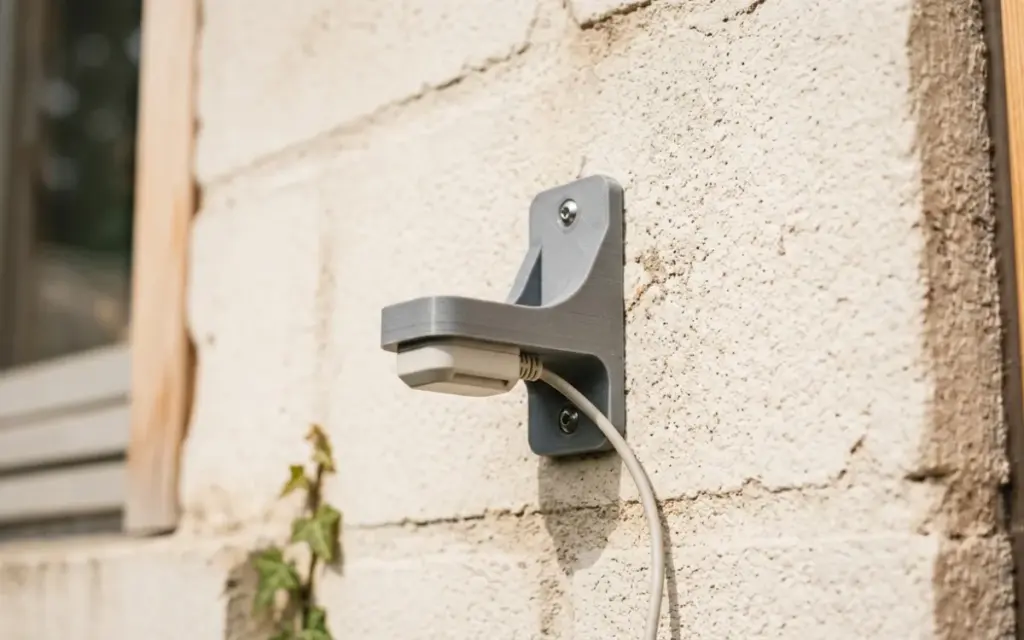
Weather stations, air quality sensors, CCTV camera housings, smart home boxes — anything that stands outdoors and needs to protect electronics. ASA provides both mechanical protection and weather resistance.
When to choose ASA and when another material
A simple rule of thumb: if the part will be outdoors, choose ASA. If the part is for indoors only and won’t be exposed to high temperatures, PLA or PETG will be easier to work with. If you need maximum heat resistance indoors and UV resistance isn’t critical, ABS will be cheaper.
ASA is a material with a specific strength. It doesn’t replace all other plastics, but in its niche — outdoor items — it has no equal among affordable FDM materials.
Need ASA 3D printing in Lviv?
We print parts in ASA and other engineering plastics on professional equipment. Tell us about your project — we’ll help you choose the best material and prepare the parts for printing.
Need a part for outdoors? Send a model — we’ll choose a plastic that can handle sun and rain and give you a price within an hour.
FAQ
How is ASA different from ABS?
Mechanically they’re almost the same, but ASA is UV-resistant: ABS yellows and becomes brittle in the sun within 2–3 months, while ASA keeps up to 90% of its strength after a year outdoors.
When should I choose ASA?
For anything that stands outdoors: exterior car parts, garden fixings, housings for outdoor sensors and cameras, models for open-air exhibitions.
What are the print settings for ASA?
Nozzle 240–260 °C (start at 250 °C), bed 90–110 °C, minimal or no part cooling, first layer at 20–30 mm/s. An enclosed chamber is highly desirable.
Is ASA harmful when printing?
It gives off styrene fumes, so it should be printed with ventilation or extraction, not in a living room.