PLA vs PETG vs TPU — which material to print with
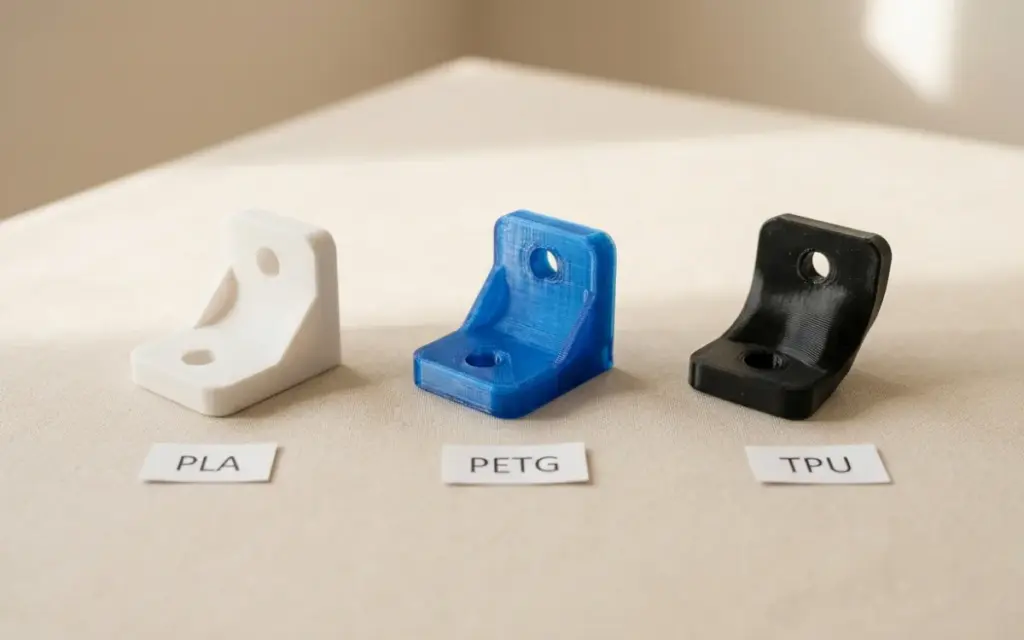
In short
- PLA — for decor and prototypes: from 5 UAH/g, smooth surface, but it softens at just 55–60 °C and is brittle.
- PETG — for functional parts: from 6 UAH/g, strong, moisture resistant, holds up to 75–85 °C.
- TPU — for flexible parts (on request): elastic, absorbs impacts and vibration, but prints slowly.
- For outdoor use, choose PETG or TPU — PLA breaks down in sun and moisture.
Why the choice of material matters
The material determines how long a part will last, whether it can take the load and how the finished item will look. Customers often ask: “What’s best to print with?” The short answer: it depends on the job. Read on for the full answer.
Here we compare the three materials we use most often: PLA, PETG and TPU. For each one, we’ll explain when it works well and when it’s better to choose something else.
PLA — where everyone starts
PLA (Polylactic Acid) is a biodegradable plastic made from corn starch. We print around 60% of orders in PLA. The reason is simple: it’s cheap, looks good and prints without trouble.
PLA properties
- Print temperature: 190–220°C
- Bed temperature: 50–60°C (it can print without a heated bed)
- Shrinkage: minimal (under 0.5%)
- Smell when printing: barely noticeable, slightly sweet
- Heat resistance: softens at 55–60°C
- Price: from 5 UAH/g
PLA advantages
- The easiest to print — minimal printer requirements, adhesion problems are rare.
- Good surface quality — a smooth, neat surface with minimal defects. That’s exactly why we often print display and presentation pieces in PLA.
- A huge range of colours — dozens of options: silk, glitter, wood-effect, marble.
- Biodegradable — breaks down in a few months under industrial composting conditions.
- The cheapest — from 5 UAH/g of finished part.
- Excellent detail — reproduces small features, textures and lettering well.
PLA drawbacks
- Afraid of heat — a part will warp at just 55°C. A real case: a customer left a PLA phone holder in their car in summer, and it deformed within a few hours.
- Brittle — it cracks on impact rather than bending. Not suitable for mechanical parts.
- Weak chemical resistance — not suitable for contact with aggressive substances.
- Not for outdoors — it gradually breaks down in sun and moisture.
What PLA is good for
Decor, prototypes for checking shape, figurines, cosplay, architectural models, stands and organisers for the home, POS materials, display samples. In our experience, 90% of decorative orders are printed in PLA.
PETG — when you need strength
PETG (Polyethylene Terephthalate Glycol-modified) is a modified version of ordinary PET, the plastic used for water bottles. Adding glycol improves printability and clarity. PETG combines the easy printing of PLA with strength close to ABS, which is why we recommend it for most functional parts.
PETG properties
- Print temperature: 220–250°C
- Bed temperature: 70–85°C
- Shrinkage: low (under 1%)
- Smell when printing: minimal
- Heat resistance: softens at 75–85°C
- Price: from 6 UAH/g
PETG advantages
- Strong — much stronger than PLA, handles mechanical loads.
- Unafraid of moisture — doesn’t absorb water, suits outdoor and damp locations.
- Chemical resistance — resists household chemicals, acids and alkalis.
- Flexes on impact — unlike PLA, PETG bends rather than breaks. We’ve tested it: a PETG part can be dropped on the floor — it bounces rather than cracks.
- Food-safe — if the filament is certified.
- Transparent — available in clear and translucent colours.
- Not hard to print — a bit fussier than PLA, but much easier than ABS.
PETG drawbacks
- Stringing — it pulls thin threads between features. On our direct-drive Bambu Lab printers this is fixed by tuning retraction and temperature.
- Sticks to the bed too well — it can sometimes damage the build surface. We use a glue stick as a release layer.
- Surface not as good as PLA — not as smooth, can be slightly rough.
- The spool must be kept dry — the filament absorbs moisture from the air (although the printed part is moisture resistant). How to do it right is explained in the article how to store filament.
What PETG is good for
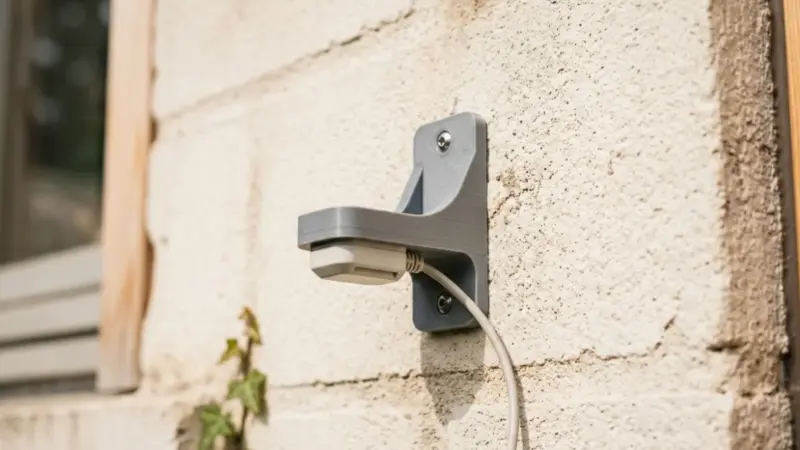
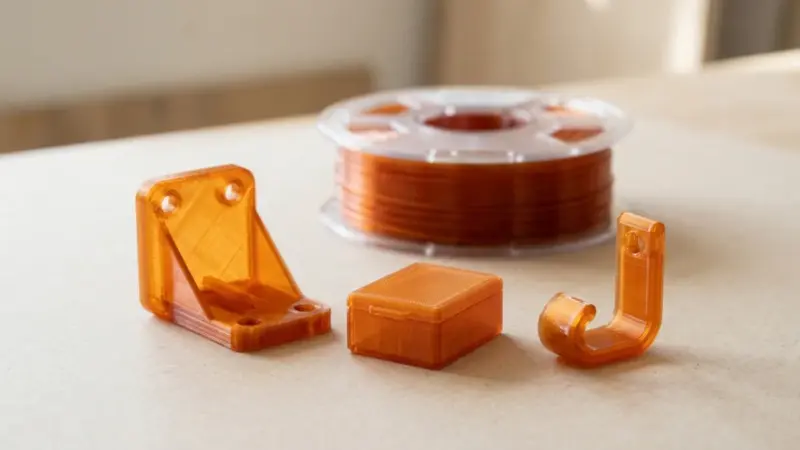
Functional parts, electronics enclosures, outdoor mounts, spare parts for appliances, holders, containers, parts in contact with water, car accessories. We often print Arduino and Raspberry Pi enclosures in PETG — they’re both strong and heat-resistant.
TPU — flexible and elastic
TPU (Thermoplastic Polyurethane) feels like rubber. TPU opens up possibilities that rigid plastics can’t offer: cases, gaskets, shock absorbers.
TPU properties
- Print temperature: 220–240°C
- Bed temperature: 40–60°C
- Shore hardness: 85A–95A (the lower, the softer)
- Smell when printing: faint
- Heat resistance: medium
- Price: on request
TPU advantages
- Elasticity — it bends, stretches, compresses and springs back.
- Absorbs impacts — ideal for protective parts. One customer ordered TPU bumpers for a drone from us — no damage after several crashes.
- Wear resistance — much higher than PLA and PETG.
- Chemical resistance — withstands contact with oils and solvents.
- Dampens vibration — reduces noise from vibrating parts.
- Waterproof — with the right print settings, a part holds water.
TPU drawbacks
- Hard to print — flexible filament is difficult to feed through the extruder. It only works properly with Direct Drive (Bowden causes lots of problems).
- Slow printing — 20–40 mm/s, 2–3 times slower than PLA.
- Supports are hard to remove — they’re flexible too and cling to the part.
- More expensive than PLA — we print it on request.
- Less detail — small features can come out blurry.
What TPU is good for
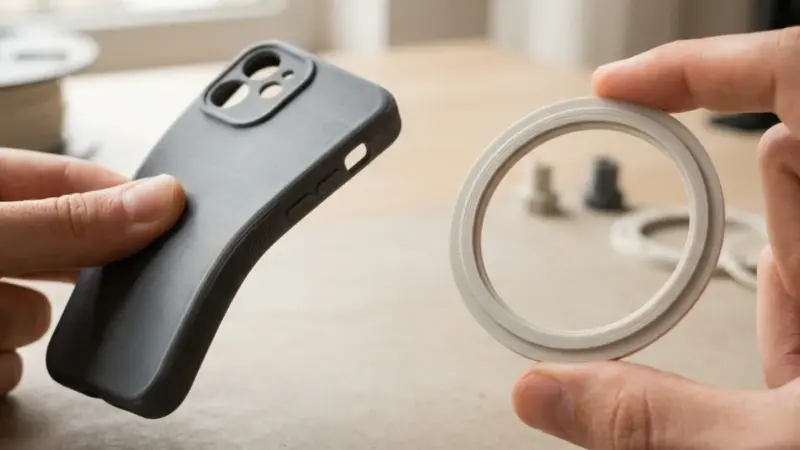
Phone cases, shock absorbers, gaskets, seals, flexible joints, vibration-damping mounts, soft grips and pads, medical orthoses, rollers.
Comparison table: PLA vs PETG vs TPU
| Property | PLA | PETG | TPU |
|---|---|---|---|
| Price per gram | from 5 UAH | from 6 UAH | on request |
| Ease of printing | Very easy | Easy | Difficult |
| Strength | Medium | High | High (elastic) |
| Elasticity | Rigid | Semi-rigid | Elastic |
| Heat resistance | 55°C | 80°C | 80°C |
| Moisture resistance | Low | High | High |
| UV resistance | Low | Medium | High |
| Surface quality | Excellent | Good | Fair |
| Impact resistance | Low | High | Very high |
Which material to choose for your project
Here’s a simple cheat sheet we use ourselves:
Choose PLA if:
- You need a prototype to check shape and dimensions
- The part will stay indoors at room temperature
- Looks and a smooth surface matter
- Your budget is limited
- The part is decorative, with no serious loads
Choose PETG if:
- The part will work under load
- The item will be outdoors or in a damp room
- You need resistance to temperatures above 60°C
- The part is functional: a mount, enclosure or holder
- You need chemical resistance
Choose TPU if:
- The part needs to be flexible or elastic
- You need impact and vibration damping
- The item works under friction and wear
- You need a seal, gasket or case
- The part must return to shape after deformation
How to order printing in the material you need
Can’t decide on a material? That’s normal — even experienced engineers sometimes hesitate. Message us, describe the job, and we’ll suggest the best option. Over the years we’ve seen hundreds of different projects and know what works in practice.
At 3dprint.lviv.ua PLA, PETG and TPU are available in different colours. More about each material is on the materials page. Printing prices are in the price list.
Read also
Got a project and need advice on materials? Message us — we’ll help you choose the material, work out the price and make the part on time.
Order 3D printing
Need quality 3D printing? more about materials. printing prices. order printing. Delivery across Ukraine by Nova Poshta.
Not sure which of the three plastics you need? Send the model and describe where the part will be used — we’ll choose the material and quote it within an hour.
FAQ
Which material is the cheapest for 3D printing?
PLA is the cheapest material, from 5 UAH/g. It suits decorative items, prototypes and models.
Which plastic is the strongest for 3D printing?
PETG is the best choice for strong functional parts. It resists impacts, moisture and temperatures up to 80 °C.
How is TPU different from PLA and PETG?
TPU is a flexible, elastic, rubber-like material. PLA and PETG are rigid. TPU is used for cases, gaskets and shock absorbers.
Which material should I choose for outdoor use?
PETG or TPU. PLA isn’t suitable outdoors — it breaks down in sun and moisture. PETG withstands the weather, and TPU is also UV-resistant.