3D printing vs CNC vs casting — which manufacturing method to choose
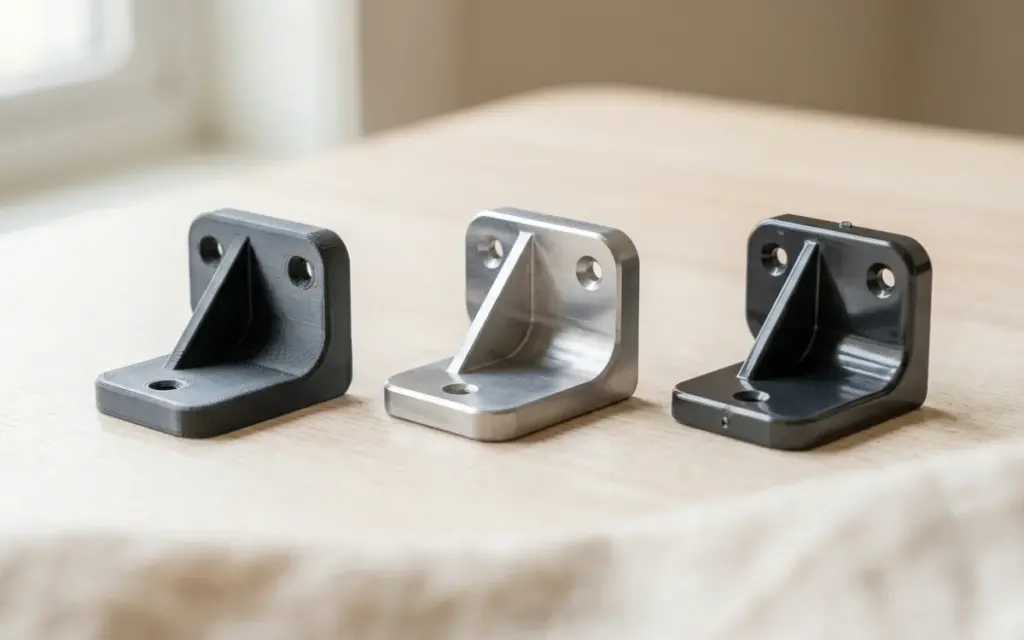
When a business needs to make a part, an enclosure or a prototype, the choice of manufacturing technology directly affects the budget, the timeline and the quality of the finished product. The three most common methods — 3D printing (FDM), CNC milling and mould casting — have fundamentally different strengths and limitations.
Each technology in brief
FDM 3D printing — additive manufacturing
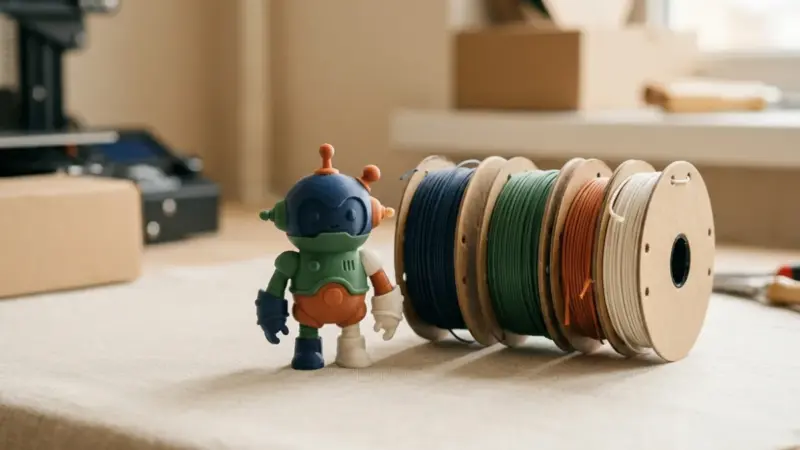
Material (a plastic filament) is fed through a heated head and laid down layer by layer, building the part from the bottom up. It’s an additive technology: material is added rather than removed. FDM printing makes geometrically complex items possible without any extra tooling — all you need is a 3D model.
CNC milling — subtractive manufacturing
A computer-controlled cutter carves the part out of a solid block of material — metal, plastic or wood. The technology gives high accuracy and an excellent surface finish, but it needs skilled programming and is limited when it comes to internal cavities.
Silicone mould casting — batch production
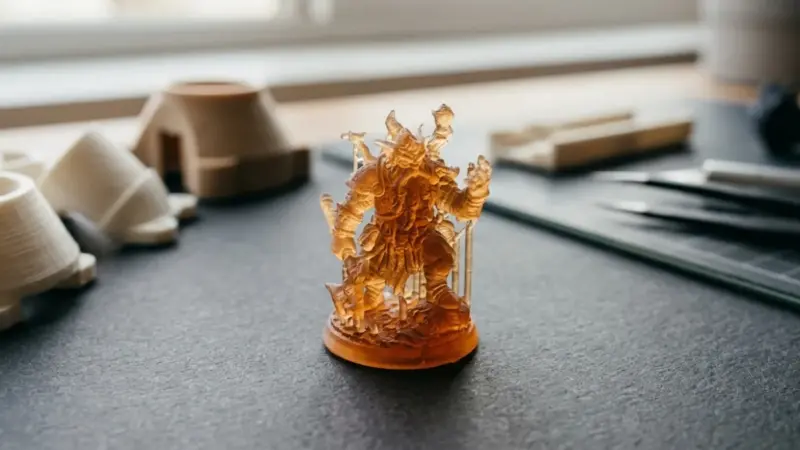
First a master model is made (often using 3D-printed prototypes), then a silicone mould is taken from it and filled with polyurethane or another material. The method works well for producing batches of identical parts.
Comparison by key criteria
Cost for small runs (1–100 pieces)
- 3D printing — the lowest start-up cost. No moulds, tooling or special preparation needed. See our 3D printing prices.
- CNC milling — medium cost. It needs toolpath programming and blank preparation.
- Casting — a high start-up cost because a mould has to be made (from 5,000 UAH and up). It makes economic sense from 50–100 units.
Lead time
- 3D printing — from a few hours to 1–3 days. The fastest start: upload the model and printing begins.
- CNC — 1 to 5 days, depending on the complexity of the part.
- Casting — 5 to 14 days for the first batch (including making the mould).
Accuracy and surface quality
- 3D printing (FDM) — accuracy of ±0.2–0.5 mm. Visible layers on the surface, which can be removed by post-processing if needed.
- CNC — the highest accuracy, down to ±0.05 mm. A smooth surface with no extra finishing.
- Casting — accuracy of ±0.2–0.5 mm, depending on the quality of the master model.
Geometry limitations
- 3D printing — minimal limitations. Internal cavities, complex organic shapes and lattice structures are possible.
- CNC — significant limitations. A cutter can’t reach deep internal channels or closed cavities.
- Casting — moderate limitations. The part must be able to come out of the mould.
Materials
- 3D printing — PLA, PETG, ABS, nylon, TPU (elastic), carbon fibre composites.
- CNC — aluminium, steel, brass, titanium and plastics. The widest choice for metal parts.
- Casting — polyurethanes of varying hardness, silicones, epoxy resins.
Summary comparison
- Cost for 1–10 pcs: 3D printing — low | CNC — medium | Casting — high
- Cost for 100+ pcs: 3D printing — medium | CNC — medium | Casting — low
- Start-up time: 3D printing — hours | CNC — 1–5 days | Casting — 5–14 days
- Accuracy: 3D printing — ±0.2 mm | CNC — ±0.05 mm | Casting — ±0.3 mm
- Complex geometry: 3D printing — yes | CNC — limited | Casting — partly
- Metals: 3D printing — no (FDM) | CNC — yes | Casting — no
- Minimum run: 3D printing — 1 pc | CNC — 1 pc | Casting — 50+ pcs
Which technology to choose: recommendations
Choose 3D printing if:
You need a prototype, a one-off item or a small run of up to 100 pieces. It’s the best option for testing a design, checking ergonomics and making functional parts with complex geometry. 3D printing lets you iterate quickly — change the model and get an updated part the very next day. Read more in our article on 3D-printed prototypes for business.
Choose CNC milling if:
The part must be made of metal, take significant mechanical loads or meet tolerances tighter than ±0.1 mm. CNC is indispensable for precision mechanical assemblies and engine parts.
Choose casting if:
You need a run of 100+ identical plastic parts. At large volumes the unit cost is much lower. But for the first samples it’s better to use 3D printing, and to start casting only after the design is finally approved.
A combined approach — the most effective strategy
In practice, the technologies often complement each other. A typical scenario: first 3D printing for rapid prototyping, then design refinement, and finally casting or CNC for production. The master model for a silicone mould is also often 3D printed.
Ready to start production?
If you’re not sure which technology suits you, send us a 3D model or describe the task. We’ll advise and quote for free. For prototypes and small runs, FDM 3D printing is in most cases the fastest and most economical choice.
Order 3D printing or get advice →
Want to test an idea for real? Send the model — we’ll print it in PLA or PETG and quote it within an hour.