3D printing for artists and designers: from sketch to physical object
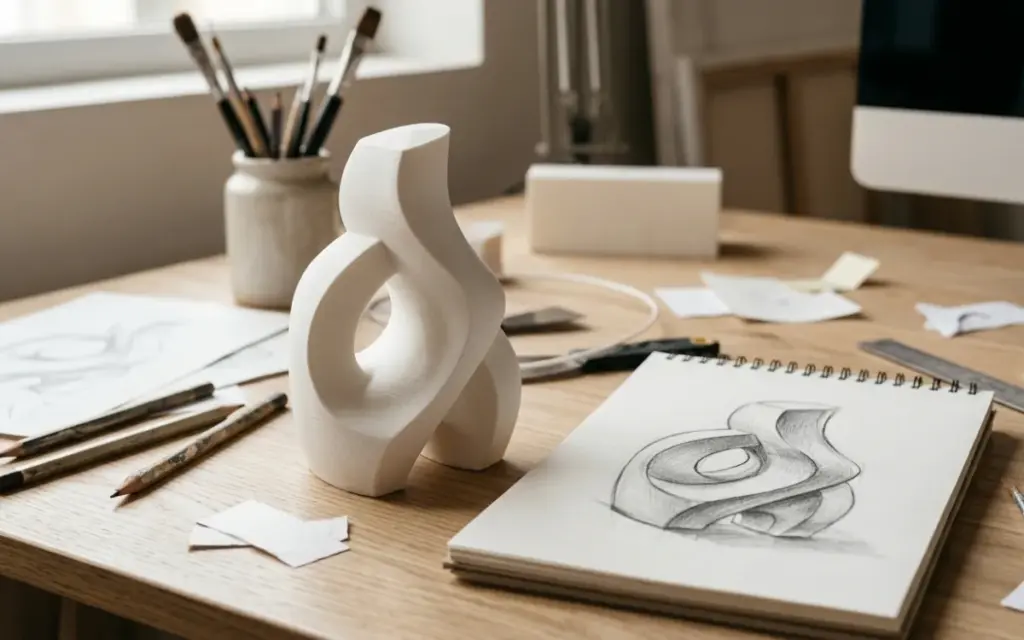
3D printing for artists and designers: how to turn a sketch into a physical object
Contemporary art moved beyond canvas and clay long ago. 3D printing gives artists, sculptors and designers possibilities that seemed like science fiction ten years ago: creating a complex sculpture in a few hours, printing an exact copy of a digital model or making a mould for serial casting. In this article we look at specific ways 3D printing is used in artistic and design practice — from art objects to tools for everyday work.
Sculptures and art objects
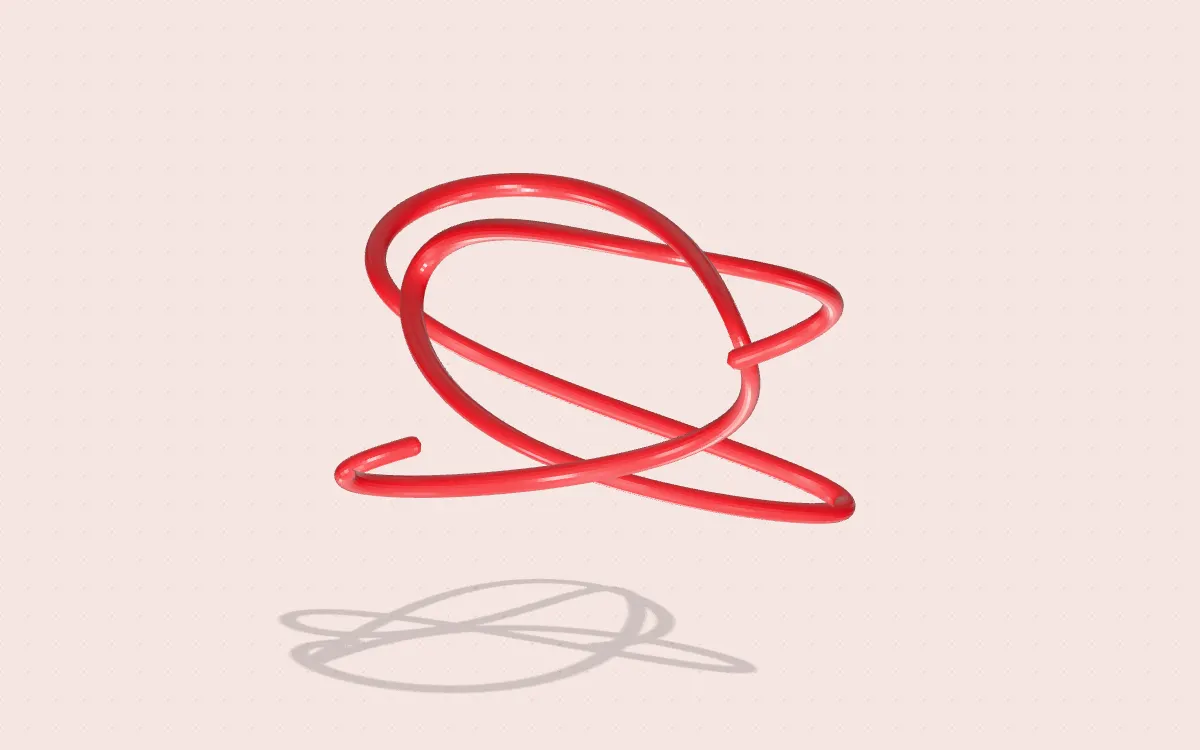
3D printing makes it possible to create sculptures with geometry that’s impossible to achieve by hand modelling or milling. Interwoven structures, thin openwork walls, internal cavities — all of this prints as a single piece without assembly.
The workflow usually looks like this: the artist creates a digital sculpture in ZBrush, Blender or another 3D editor, then the model is exported to STL format and sent for printing. If you’re just starting out with digital sculpting, we recommend Blender — it’s free and has powerful sculpting tools. ZBrush is better suited to complex organic forms with millions of polygons.
For most art objects the best choice is PLA plastic. It holds detail well and is easy to post-process — sanding, priming and painting. After finishing, a sculpture is practically indistinguishable from one made of plaster or ceramic.
Lithophanes — 3D photographs
A lithophane is a thin plate of varying thickness that turns an ordinary photo into a three-dimensional image. When a lithophane is backlit, the thinner areas let more light through, while the thicker ones stay dark. The result is a three-dimensional “photograph” with striking depth.
Lithophanes are printed in white PLA and need no post-processing. They make a great personalised gift or a piece of interior decor. You don’t need 3D modelling skills to create a lithophane — just upload a photo to one of the free online generators, and it will automatically generate a model for printing.
Casting moulds: silicone, plaster, concrete
One of the most practical scenarios is printing master models and moulds for casting. Instead of carving the original by hand, you can create a 3D model on a computer, print it and use it as the basis for a silicone mould. Then you pour in plaster, concrete, epoxy resin or any other material.
For moulds that will take hot material (for example, molten wax at up to 70–80 °C), PETG is better than PLA. PETG withstands higher temperatures and deforms less. If you work with plaster or concrete at room temperature, PLA is quite enough.
- Silicone moulds for reproducing small sculptures and jewellery
- Moulds for concrete planters, candle holders and decorative pieces
- Matrices for plaster reliefs and bas-reliefs
- Moulds for chocolate or soap figures
Custom frames and stands for exhibitions
Preparing for an exhibition often calls for non-standard solutions: stands for unusually shaped objects, mounts for installations, frames with an individual design. 3D printing lets you make all of this exactly to your needs, without compromising with what’s available in the shops.
For example, you can print a stand that follows the outline of a sculpture perfectly, or a frame with an integrated mount for LED lighting. PLA works well for exhibition pieces and looks quite presentable after painting.
Tools for modelling and sculpture
3D printing is useful not only for making finished pieces but also for making working tools. Ceramicists and sculptors print:
- Modelling tools and spatulas with a unique profile for creating specific textures
- Templates for applying patterns evenly to clay
- Free-form cutters for working with polymer clay
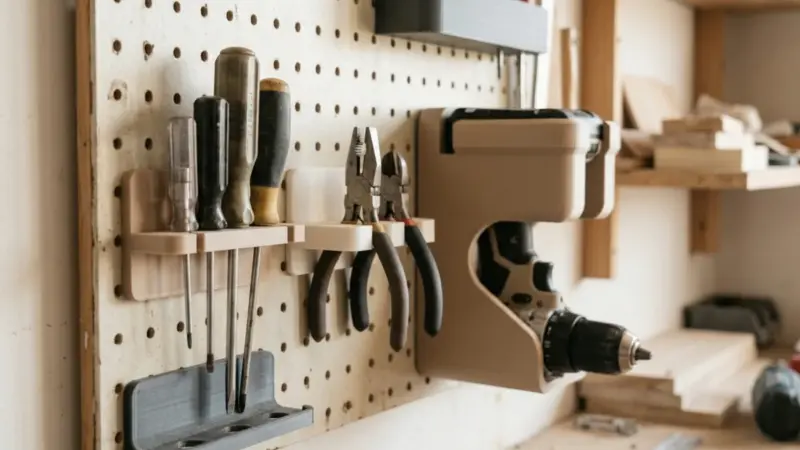
- Handles and holders for their own metal tools
The advantage is obvious: instead of hunting for the right tool, you simply design it for the specific task.
Stamps and stencils
For artists who work with textiles, ceramics or paper, 3D-printed stamps and stencils are a way to scale up handwork without losing individuality. You create your own ornament, print a stamp and then use it as many times as you like.
PLA works well for stamps used with paint or ink. If a stamp will come into contact with hot material — for example, for embossing wax — choose PETG.
Models for installations
Before building a large-scale installation, it makes sense to create a scaled-down model. 3D printing is ideal for this: you quickly get a physical model, assess the proportions, show the concept to the client or curator, make changes and print an updated version.
It’s much cheaper and faster than building each iteration of the model by hand. And the digital model is kept and can be scaled up to full size when the time comes to build it.
Personalised souvenirs
If you’re an artist or designer with your own style, 3D printing lets you create a line of signature souvenirs: miniature copies of your sculptures, key rings with your characters, decorative magnets or desk objects. It’s both extra income and a way to promote your own brand.
Even a small run of 20–50 pieces becomes economically viable with 3D printing — no injection moulds, no minimum order.
How to start: from idea to finished piece
Going from a sketch to a physical object takes a few steps:
- Sketch or concept — draw by hand or create a digital sketch
- 3D modelling — use Blender, ZBrush or another editor; if you need help, we’ll show you how to create a 3D model
- Printing — choose the right material depending on what the piece is for
- Post-processing — sanding, priming and painting to achieve the look you want; more on the post-processing of 3D parts page
If you already have a ready-made 3D model — great, the process is even simpler. If there’s no model but you have an idea, we’ll help you bring it to life at any stage.
Important: we print only from a ready-made 3D model (STL, OBJ, STEP or 3MF). No model? We’ll tell you where to find a ready-made one (on Printables, Thingiverse or MakerWorld) or who can make it.
Ready to turn your idea into a physical object?
Send us your model or sketch, or simply describe the task — we’ll choose the best printing method and material. We work with artists, designers, architects and everyone who creates.
Have an idea for something to print? Send a model or a photo of the part — we’ll quote it within an hour and suggest the right material.