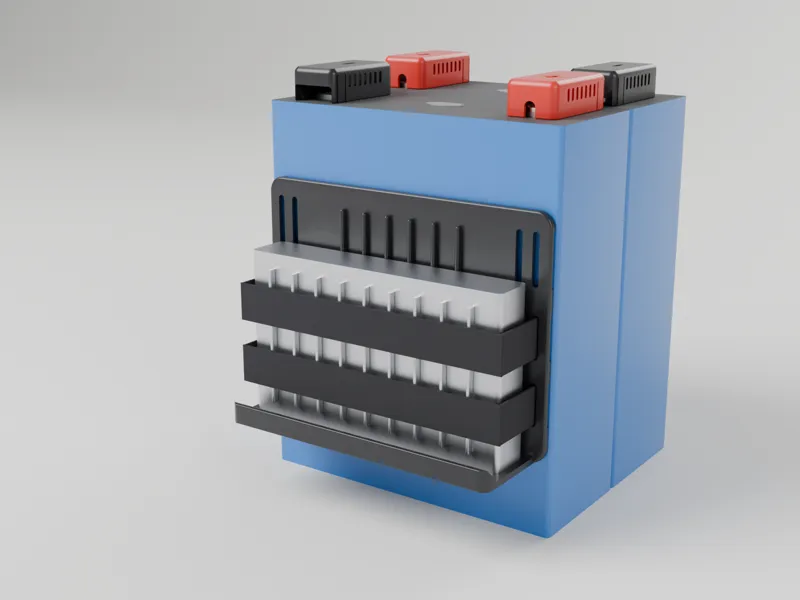
Insulation against touch, not heat
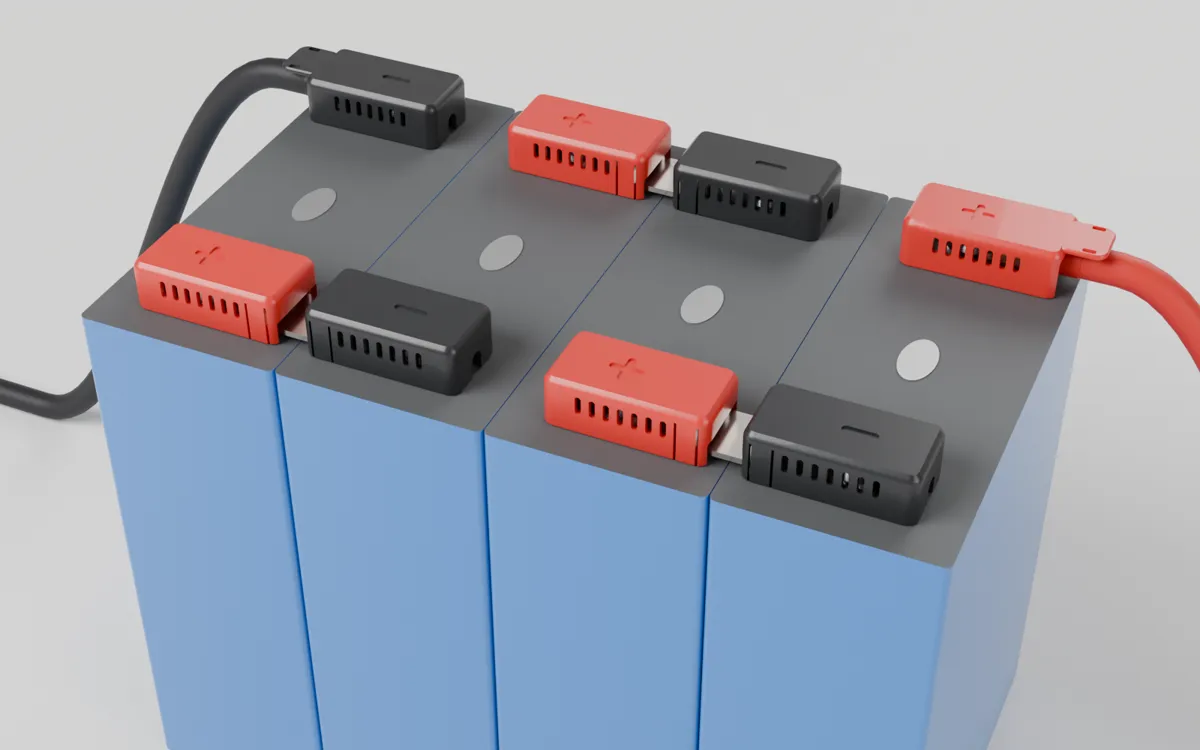
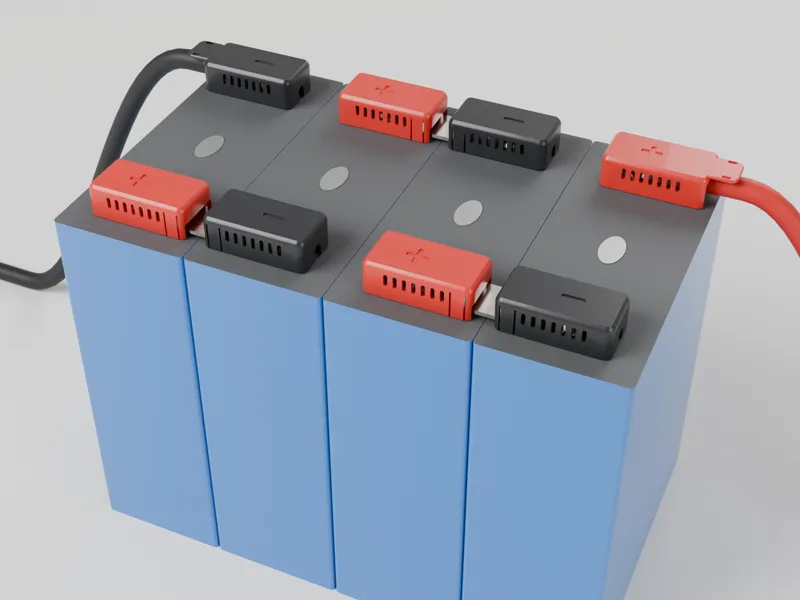
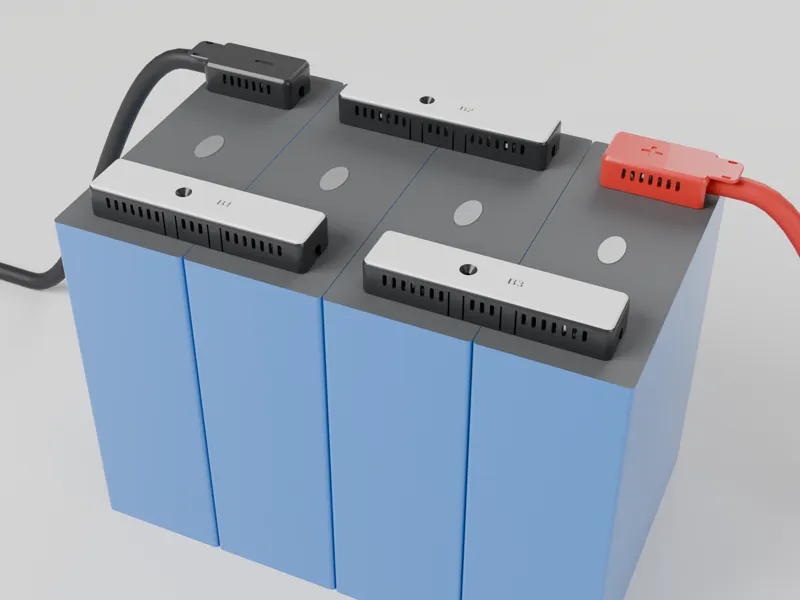
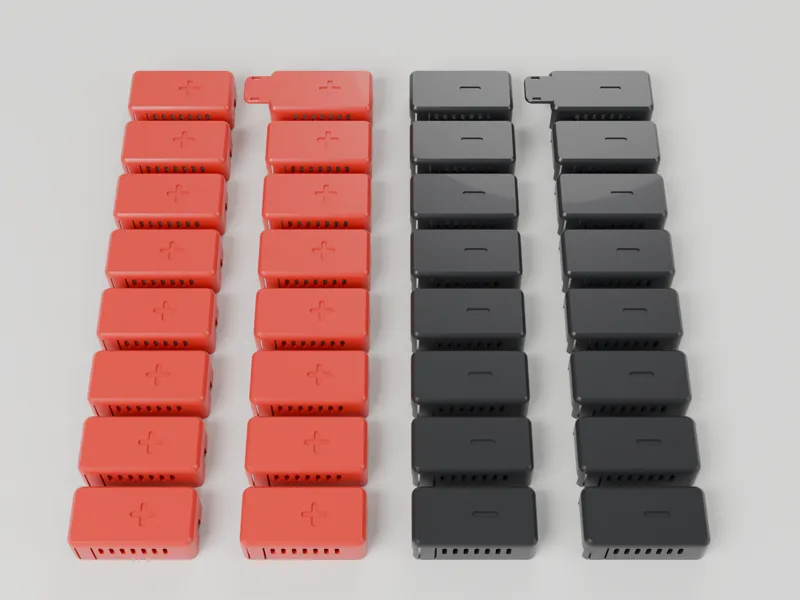
The caps and covers shield the terminals and busbars from an accidental touch: a finger, a spanner, a dropped wire. A Ø12 mm test finger cannot reach metal through any opening, and a wire thicker than 2.5 mm does not fit through the vents. They do not protect against heat, sparks or a short circuit inside the pack, and PETG burns. A fuse, a BMS and the correct terminal torque are mandatory — the caps do not replace them.
Heat is taken into account
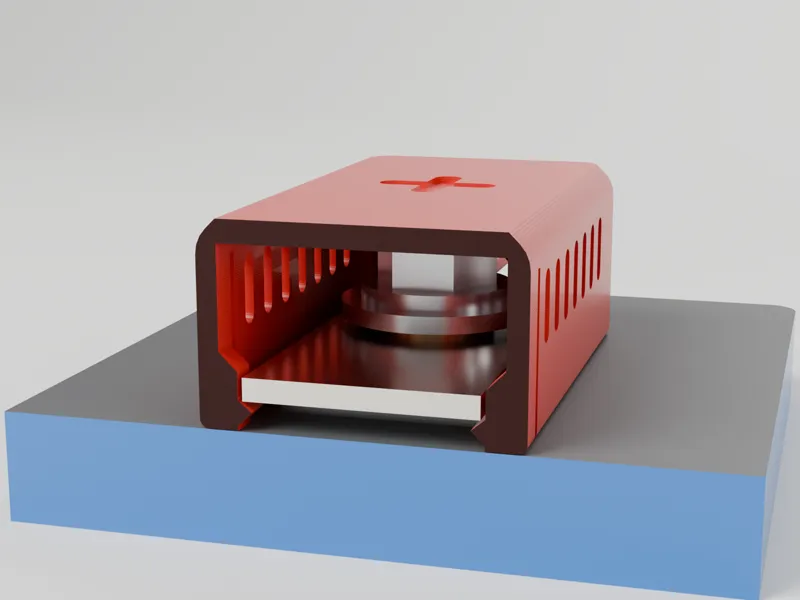
PETG never rests on metal: the walls sit 2 mm from the busbar, the roof clears the nut and the side walls are vented. A cap only takes away the convection from the metal beneath it, and by calculation the terminal under it runs 0.9 °C warmer. A bad contact heats a terminal, not a cap. The limit is 60 °C continuous at the busbar and terminal: that is also the limit of the EVE cells themselves, while PETG reaches its glass transition at 68 °C. Do not place the pack next to a boiler or heater, in the sun or in a loft.
Which cells they fit
The caps and covers are designed for EVE LF280K, LF304 and MB31 314 Ah cells (173.7 × 71.7 mm) with a 20 × 2 mm busbar and a cell pitch of 71.7–72.9 mm — tight, with film or on spacers. CATL and Hithium cells of the same size fit after checking against the datasheet: terminals differ between batches. Manufacturers do not publish the terminal pad and stud height, so before the first order we will ask you to measure them on your cell. For the LF105 or a wider or longer busbar we recalculate the model.
Limitations
- We print only in plain PETG: PETG-CF and metal-filled plastics conduct electricity.
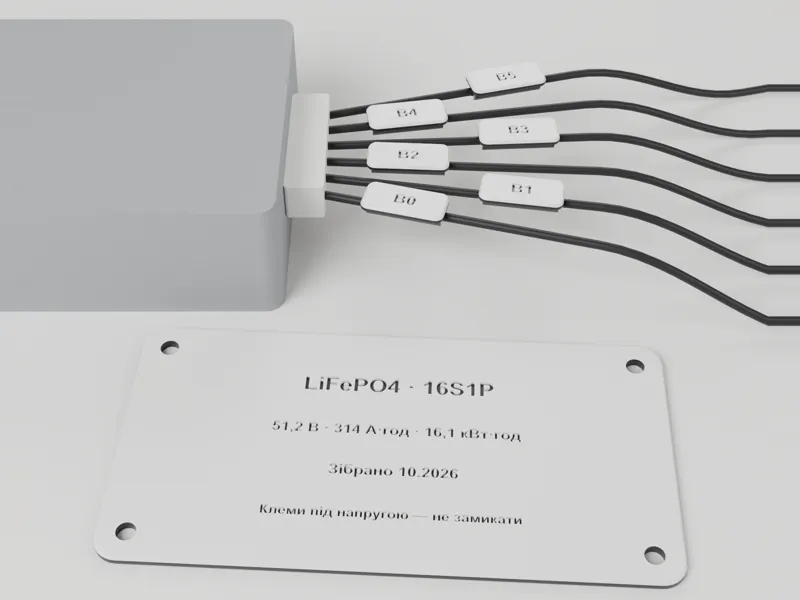
- The covers insulate against touch, but they are not IP-rated: a thin wire will get through the balance wire cut-out.
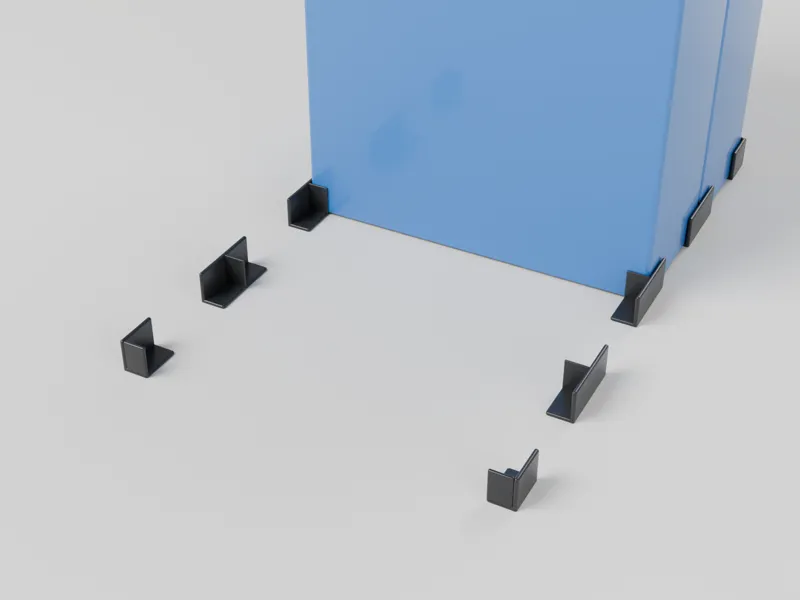
- The spacers are for packs without compression. Cells clamped in a frame should rest on a solid insulating sheet.
- The end cap cable exits forwards, along the busbar. A cable bent upwards right at the lug will not fit.
- Before working on the terminals, switch off the load and open the BMS; use spanners with insulated handles.
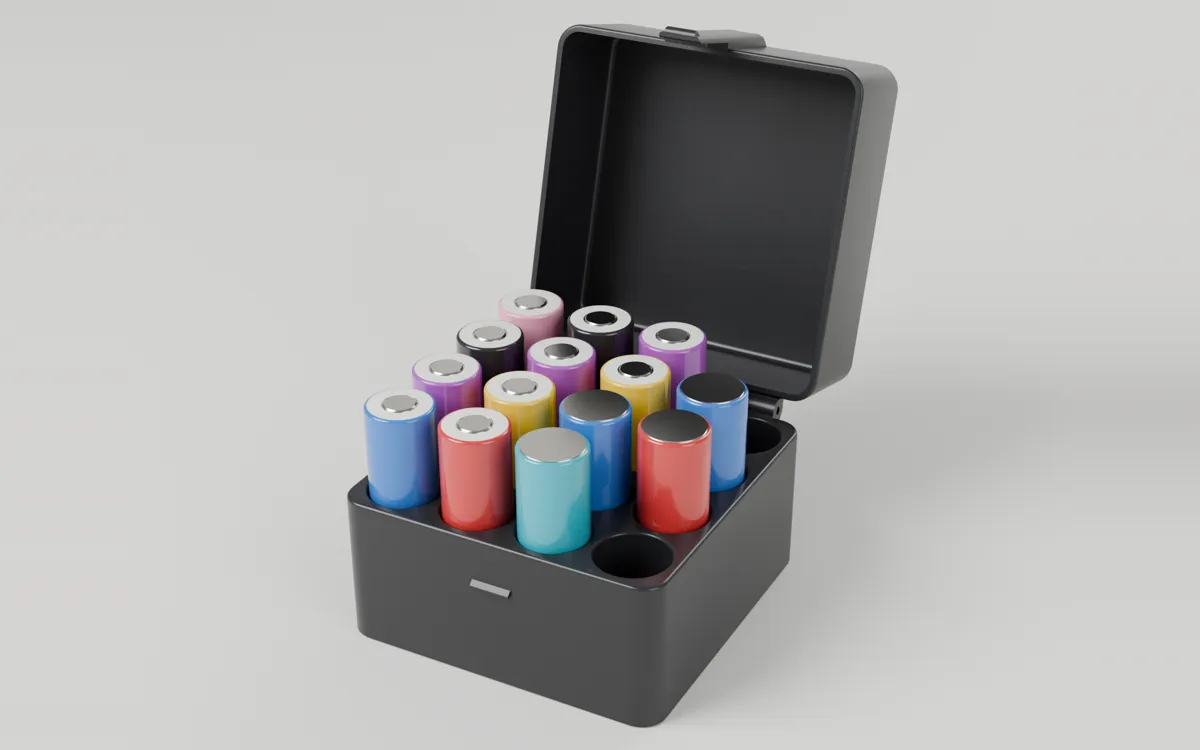 18650 battery boxA 16-cell case with a lid, dovetail modules, a pocket case, a honeycomb tray, a wall dispenser and trays for workshops.
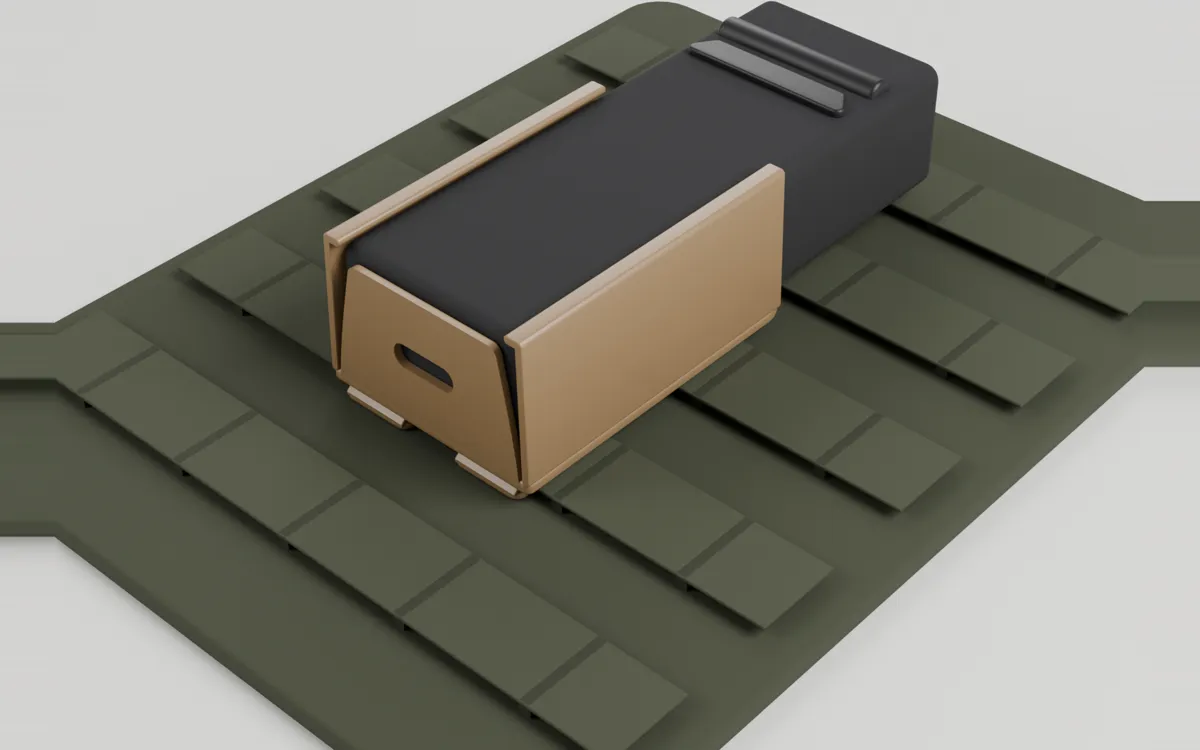 Tourniquet holderFor MOLLE, for a belt, a universal one with shock cord, a budget sleeve, a pair for two tourniquets and a wall holder for shelters.
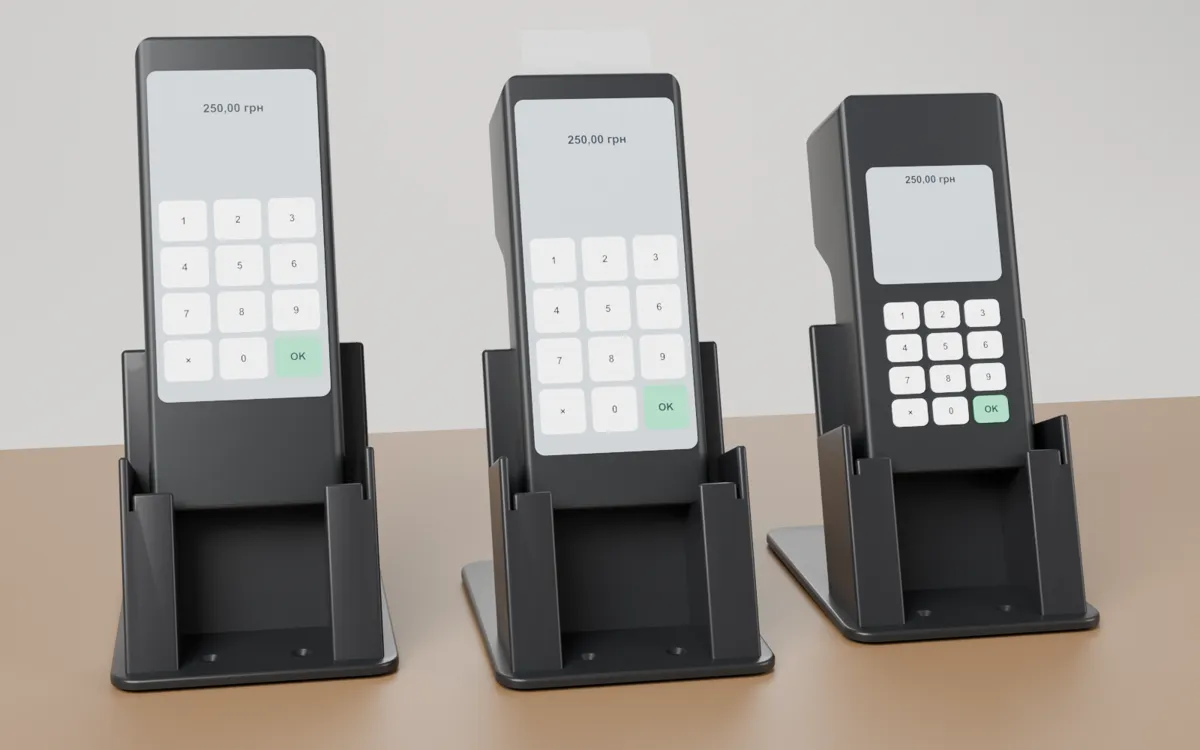 POS terminal standsA swivel counter stand, a wall holster, a universal stand, a stand for a phone terminal, a cashier station and stands with your logo.
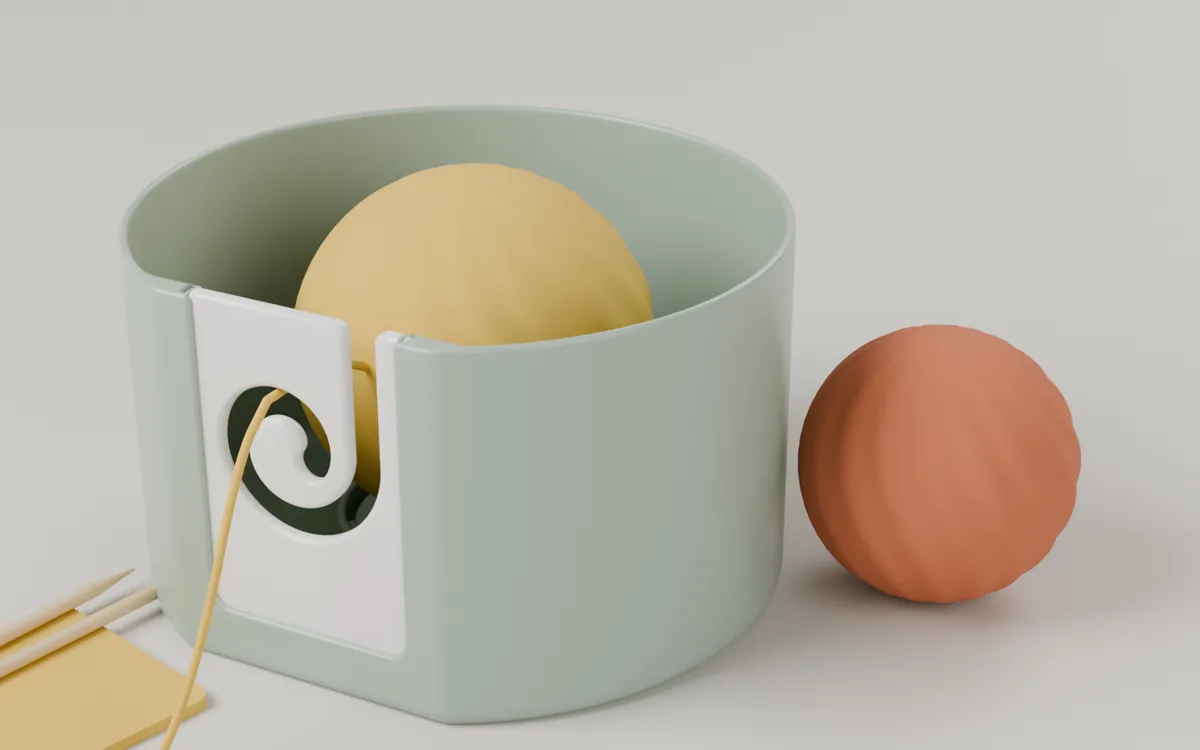 Yarn bowlA heavy bowl with a spiral, a jar with a cat-proof lid, a clip for your own bowl and a double bowl for two balls.
 Printing from your modelSend your model — priced by weight, free quote.