3D printing for the garden: useful tools for gardeners
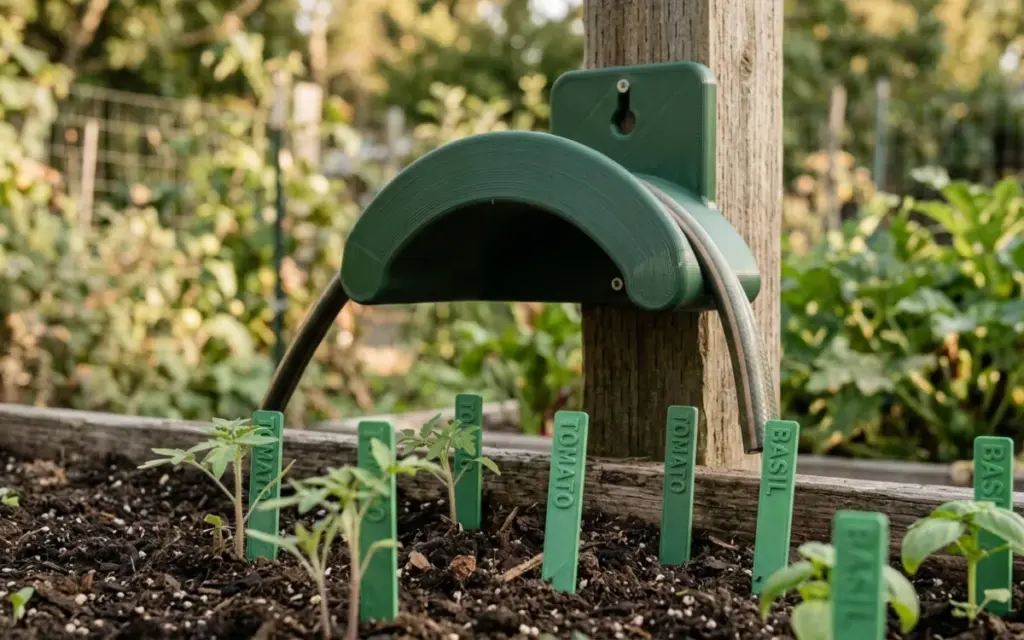
3D printing for the garden and allotment: useful tools that make every gardener’s life easier
The gardening season always comes with a list of little things you’re missing: the bed markers got lost, the irrigation fitting cracked, or you can’t find a pot of the right size in the shop. This is where 3D printing helps. Instead of compromising with mass-market products, you can print exactly what you need — for the specific dimensions, shape and conditions of your garden.
In this article we look at eight categories of useful garden tools that are easy to make on a 3D printer and suggest which printing material to choose so the item lasts more than one season.
Which material to choose: PETG or PLA?
Before moving on to specific items, it’s worth sorting out materials. Most garden tools work outdoors in direct sun, rain and changing temperatures. For these conditions we definitely recommend PETG — it’s UV-resistant, doesn’t become brittle in frost and doesn’t deform in heat. PLA is suitable only for temporary or seasonal items that will be used for a few weeks in the shade — for example, seedling trays that will sit on a windowsill until planting out.
Pots and planters with drainage
One of the most popular garden items for 3D printing is a pot with a well-thought-out drainage system. Unlike shop-bought options, you can design:
- the exact number and size of drainage holes for a specific plant;
- a built-in saucer to catch excess water;
- a pot with a double bottom for self-watering;
- non-standard shapes that fit your balcony or windowsill perfectly.
Print pots that will stand outdoors in PETG. If the planter is only a decorative cover for an inner plastic pot indoors, PLA can be used.
Plant and bed markers
Which of us hasn’t mixed up tomato or pepper varieties after planting out? Printed bed markers solve this problem once and for all. You can make labels with raised or engraved text that won’t wash off in the rain or fade in the sun. Popular options:
- stakes pushed into the soil with the variety name;
- hanging tags for shrubs and trees;
- coloured clip-on markers for seedlings (for example, red for hot peppers, yellow for sweet).
Markers stay outdoors all season, so we definitely print them in PETG. Choose light colours — text is easier to read on them.
Drip irrigation fittings
Drip irrigation systems are great, but their weak link is the fittings. Plastic stakes from the shop often break, don’t match the diameter or won’t stay in the soil. With 3D printing you can make:
- retaining stakes for a specific tube diameter (4 mm, 6 mm, 16 mm);
- mounts for attaching the tube to posts, a fence or raised beds;
- splitters and dripper holders;
- end plugs for tubes in non-standard sizes.
All of these are in constant contact with water and sun, so PETG is the only correct choice of material.
Seedling trays
Growing your own seedlings? Then you know the pain of hunting for trays of the right size. 3D printing lets you create a tray that fits your windowsill exactly, with cells of the optimal volume for a particular crop. Add drainage holes underneath and you have an ideal germination system.
If the trays are used only indoors for a few weeks in spring, you can save money and print them in PLA. But if you plan to harden off seedlings on a balcony or reuse the trays for several years, PETG is the better choice.
Protective covers for seedlings
Young seedlings need protection from wind, night frosts and too much sun in the first days after planting out. Printed protective covers with ventilation holes are a simple and effective alternative to cut-off plastic bottles. They can be designed with a handy stake for fixing them in the soil and openings for air circulation.
The covers work outdoors in changing weather, so we print them only in PETG.
Garden tool holders
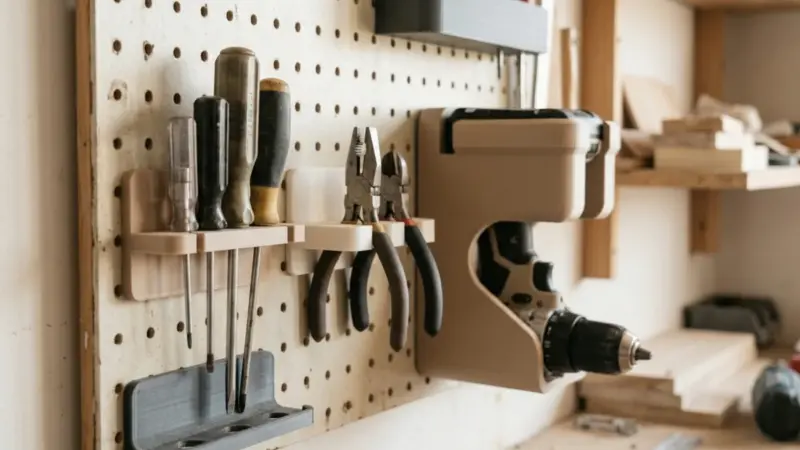
Order in the shed or on the garage wall isn’t a luxury but a time-saver. Printed wall holders help organise storage for spades, rakes, secateurs and other tools. The advantages of 3D-printed holders:
- an exact match to the handle diameter of a specific tool;
- the option of a modular system that’s easy to expand;
- extra hooks for small things — gloves, twine, labels.
If the holders are indoors, PLA will do fine. For open canopies and exterior walls, use PETG.
Bird feeders
Birds in the garden mean not only pleasant song but also natural pest control. 3D printing lets you create a feeder of any shape: from a simple platform to a complex design with a roof and squirrel protection. Keep a few things in mind when designing one:
- include drainage holes so the food doesn’t get wet;
- make it easy to take apart for cleaning;
- add perches so birds can land comfortably.
A feeder hangs outdoors all year round, so PETG is the only option.
Sprayers and hose nozzles
Hose nozzle broken? Need a sprayer with a non-standard spray pattern? 3D printing solves this too. You can create nozzles with different spray types — from a fine mist for delicate plants to a powerful jet for washing paths. The main thing is to measure the inside diameter of the hose accurately and include sealing grooves for rubber O-rings.
Nozzles are in constant contact with water and sun and work under pressure, so PETG is a must. PLA degrades quickly in these conditions and can crack.
Practical tips before ordering
Preparation
Before ordering a print, measure everything you need: tube diameters, windowsill width, the distance between mounting points. The more accurate the measurements, the better the result.
Modelling
If you have a ready-made 3D model — great. If not, Thingiverse and Printables have thousands of free models of garden accessories that can be adapted to your needs.
Choosing a material
Remember a simple rule: if the item will be outdoors — PETG. If it’s only indoors and temporary — PLA is acceptable. Read more about the properties of different materials on the 3D printing materials page.
Ready to create your own garden helpers?
If you have an idea for a useful garden or allotment tool, send us the model or describe what you need. We’ll help you choose the material, suggest the best print settings and make as many items as you need. Get in touch to discuss your order — from a single pot to a complete set for kitting out your garden.
Have an idea for something to print? Send a model or a photo of the part — we’ll quote it within an hour and suggest the right material.