When it’s cheaper to print a spare part than to buy it
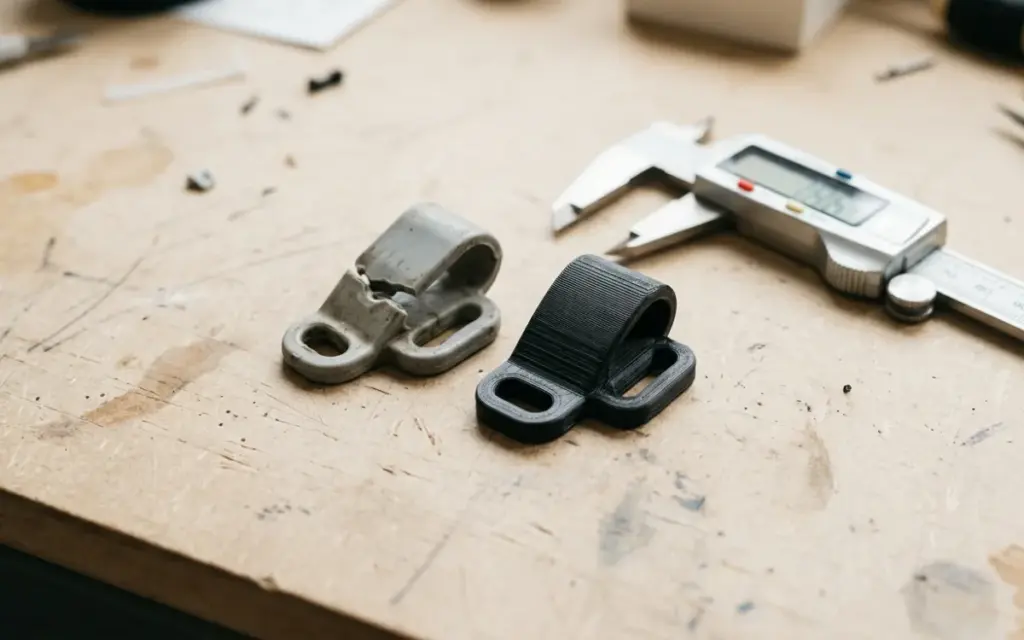
Spare parts that no longer exist: how 3D printing saves the day
The handle on your washing machine broke, a trim clip in your car cracked, or a plastic connector on your furniture fell apart? We’ve all been there. It often turns out that the spare part is no longer made, delivery will take weeks, or the price for a bit of plastic is unreasonably high. That’s when 3D printing spare parts becomes not just an alternative but the best solution.
In this article we look at when 3D printing a replacement part beats buying the original, which materials to choose for different jobs, and real examples of equipment brought back to life with 3D printing.
When 3D printing spare parts makes sense
The part has been discontinued
This is probably the most common reason people turn to 3D printing. Manufacturers of household appliances, electronics and cars regularly update their ranges, and spare parts for older models disappear from the market. Even if the appliance works fine, one broken plastic part can make it unusable.
3D printing lets you recreate any part from a sample or a drawing, whether or not the manufacturer still makes it. Just measure or scan the original part — and within hours you’ll have a fully working replacement.
You need a custom modification
Sometimes the original part doesn’t quite meet your needs. For example, a security camera bracket has the wrong angle, or a car phone holder doesn’t fit your phone. 3D printing lets you not just replace a part but also improve it for your specific requirements.
Urgency
When you need a spare part urgently and the original will take weeks or even months to arrive (especially from abroad), 3D printing saves the day. Making the part usually takes 2 to 24 hours, depending on size and complexity.
The original is overpriced
Some manufacturers charge inflated prices for spare parts, especially exclusive ones. A small plastic part can cost several hundred hryvnias, while 3D printing it costs many times less. This is especially true of simple parts — end caps, covers, holders and the like.
Small quantities
If you need one or a few parts, traditional manufacturing (moulding, milling) is unreasonably expensive because of the tooling costs. 3D printing needs no moulds or special tools, so the cost of one part doesn’t depend on the run size.
Cost comparison: 3D printing vs buying
Let’s compare typical scenarios:
- Washing machine handle: original — 200–500 UAH + delivery; 3D printing — 50–120 UAH
- Car trim clips (10 pcs): original — 300–800 UAH per set; 3D printing — 80–200 UAH
- Plastic furniture connector: original — often unavailable; 3D printing — 30–80 UAH
- Battery compartment cover: original — 100–300 UAH; 3D printing — 40–90 UAH
- Gear for a kitchen appliance: original — 300–1,000 UAH; 3D printing — 80–250 UAH
You can see current prices for spare parts printing on the 3D printing prices page at 3dprint.lviv.ua.
Examples of spare parts worth printing
Household appliances
Household appliances are the clear leader in spare parts printing requests. These are the most popular parts:
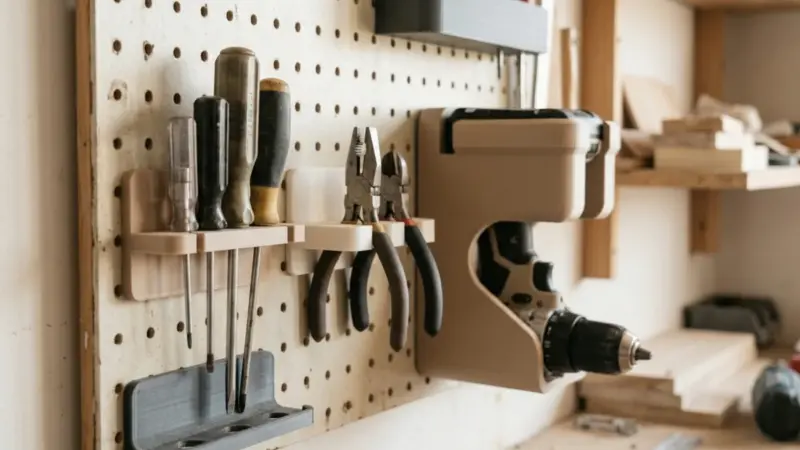
- Handles and buttons for washing machines, dishwashers, microwaves and ovens
- Trays and holders for dishwashers
- End caps and covers for various compartments
- Feet and supports for fridges, washing machines and furniture
- Latches and catches for doors and lids
PETG is usually chosen for appliance parts because of its strength, moisture resistance and moderate heat resistance.
Furniture fittings
Plastic connectors for flat-pack furniture, drawer runners, decorative caps, feet — all of these are easy to reproduce on a 3D printer. This is especially relevant for older IKEA furniture, where the original fittings can no longer be bought.
Car parts
In the automotive world, 3D-printed spare parts are gaining popularity for:
- Clips and fasteners for interior trim
- Covers and caps for fuse boxes and gloveboxes
- Holders for phones, dashcams and sat-navs
- Air vent grilles and decorative elements
- Adapters and converters for non-standard equipment
For car parts we recommend PETG or ABS because of the higher heat requirements (a car interior can reach 70–80°C in summer).
Garden machinery and tools
Plastic parts of lawnmowers, trimmers and garden tools often break under load and weather. 3D printing lets you make a replacement quickly and get the machine working again.
Choosing a material for spare parts
PLA — only for parts without load
PLA only suits decorative parts and pieces that don’t take mechanical loads or high temperatures. For example, decorative caps, cover plates and organisers.
PETG — the all-round choice for most spare parts
PETG is the best material for functional spare parts. It combines strength, flexibility, moisture resistance and moderate heat resistance (up to 80°C). It suits handles, holders, latches, housing parts and most mechanical components.
TPU — for parts that need elasticity
TPU (thermoplastic polyurethane) is a flexible material, ideal for gaskets, seals, shock absorbers, protective bumpers and feet. It withstands repeated deformation and has excellent wear resistance.
Nylon (PA) — for maximum strength
Nylon is used for parts with high requirements for strength and wear resistance: gears, bushings, levers and mechanism parts. It has the highest resistance to impact and friction of the common 3D printing materials.
You’ll find more about the available materials and their properties on the 3D printing materials page.
How to prepare a part for printing
Recreating a spare part usually involves several stages:
- Measuring the original — use callipers to measure every dimension of the part to 0.1 mm
- 3D modelling — creating a digital model in CAD software (Fusion 360, FreeCAD, SolidWorks)
- Checking the fit — printing a test version to check dimensions and joints
- Final print — making the part with the best settings and material
If you have no 3D modelling experience, message 3dprint.lviv.ua: we’ll tell you where to find a ready-made model (on Printables, Thingiverse or MakerWorld) or who can make one, and then print the part.
Limitations of 3D-printed spare parts
It’s important to understand that 3D printing isn’t a cure-all. There are cases when it’s better to buy the original part:
- Parts with very tight accuracy requirements (under 0.1 mm)
- Components that work at temperatures above 100°C
- Parts made of metal alloys (although metal 3D printing does exist)
- Safety components on which people’s lives and health depend
- Parts that require mandatory certification
Order 3D-printed spare parts
If you need a quality 3D-printed spare part, use the 3dprint.lviv.ua service. We work with a wide range of materials, have experience printing parts of varying complexity and turn orders around quickly. Get in touch, send a 3D model of the part — and we’ll find the best solution for your task. No model? We’ll tell you where to find a ready-made one (on Printables, Thingiverse or MakerWorld) or who can make it.
Order 3D printing
Need quality 3D printing? spare parts printing. materials. calculate the price. Delivery across Ukraine by Nova Poshta.
Have an idea for something to print? Send a model or a photo of the part — we’ll quote it within an hour and suggest the right material.